
Choosing between SoonLab and Rosebud AI is not just about counting features. The better question is simple: what kind of game do you want to make, and how quickly do you want to play it?
Both platforms help users turn ideas into playable games with AI. SoonLab focuses on fast browser game creation, instant play, sharing, and community discovery. Rosebud AI offers a broader creative environment for 3D games, RPGs, visual novels, AI NPCs, interactive stories, and other AI-assisted projects.
This SoonLab vs Rosebud AI comparison explains the main differences in workflow, game types, ease of use, browser play, editing, community experience, pricing, and best use cases.
 Short answer
Choose SoonLab if you want to create and share a playable browser game quickly. Choose Rosebud AI if you want a broader toolset for deeper creative projects.
SoonLab vs Rosebud AI: Quick Comparison
If you only need a quick decision between SoonLab and Rosebud AI, please check this table first.
| Comparison Point | SoonLab | Rosebud AI |
|---|---|---|
| Main focus | Fast browser game creation, play, and sharing | Broader AI game and creative app creation |
| Best for | Beginners, casual creators, students, and content creators | Creators exploring 3D games, RPGs, visual novels, and AI NPCs |
| Creation workflow | Prompt-to-play browser game workflow | Prompt-based creation with more project paths |
| Browser games | Core part of the experience | Supported, but part of a larger platform |
| 3D games | Not the main focus | Stronger feature area |
| RPGs and visual novels | Better for lighter ideas and simple prototypes | Stronger fit for story and character-driven projects |
| AI NPCs | Not the main positioning | One of Rosebud AI's key feature areas |
| Learning curve | More direct and beginner-friendly | Still accessible, but broader and more complex |
The point is not that one platform is always better. SoonLab and Rosebud AI solve different creation problems. SoonLab helps you get to a playable browser game faster. Rosebud AI gives you more room to explore larger game formats.
What Are SoonLab and Rosebud AI?
SoonLab is an AI game maker for creating, playing, and sharing browser games. Its public homepage focuses on a simple idea: if you can imagine a game, you can play it. Users can enter a prompt, generate a game, test it in the browser, and explore games made by other creators.
SoonLab works well when the goal is quick creation. It is useful for making car games, puzzle games, action games, coloring games, classroom projects, community challenges, and social media game concepts.
It also gives beginners a clearer starting point. Instead of learning a full game engine, users can describe the game they want, generate a first version, and then improve the idea through follow-up prompts.
Rosebud AI is an AI game creator with a wider set of creative tools. Its official site positions it around AI-powered game creation and lists feature areas such as game creation, 3D game making, sprite sheet generation, AI NPCs, visual novel creation, RPG creation, cozy game creation, and interactive story creation.
This makes Rosebud AI a better fit for creators who want to go beyond a simple browser game. If your idea depends on characters, dialogue, story branches, 3D spaces, AI NPC behavior, or a visual novel structure, Rosebud AI has more dedicated paths to explore.
The trade-off is that a broader toolset can require more time to learn. Rosebud AI gives users more options, but beginners may need patience to decide which path fits their project.
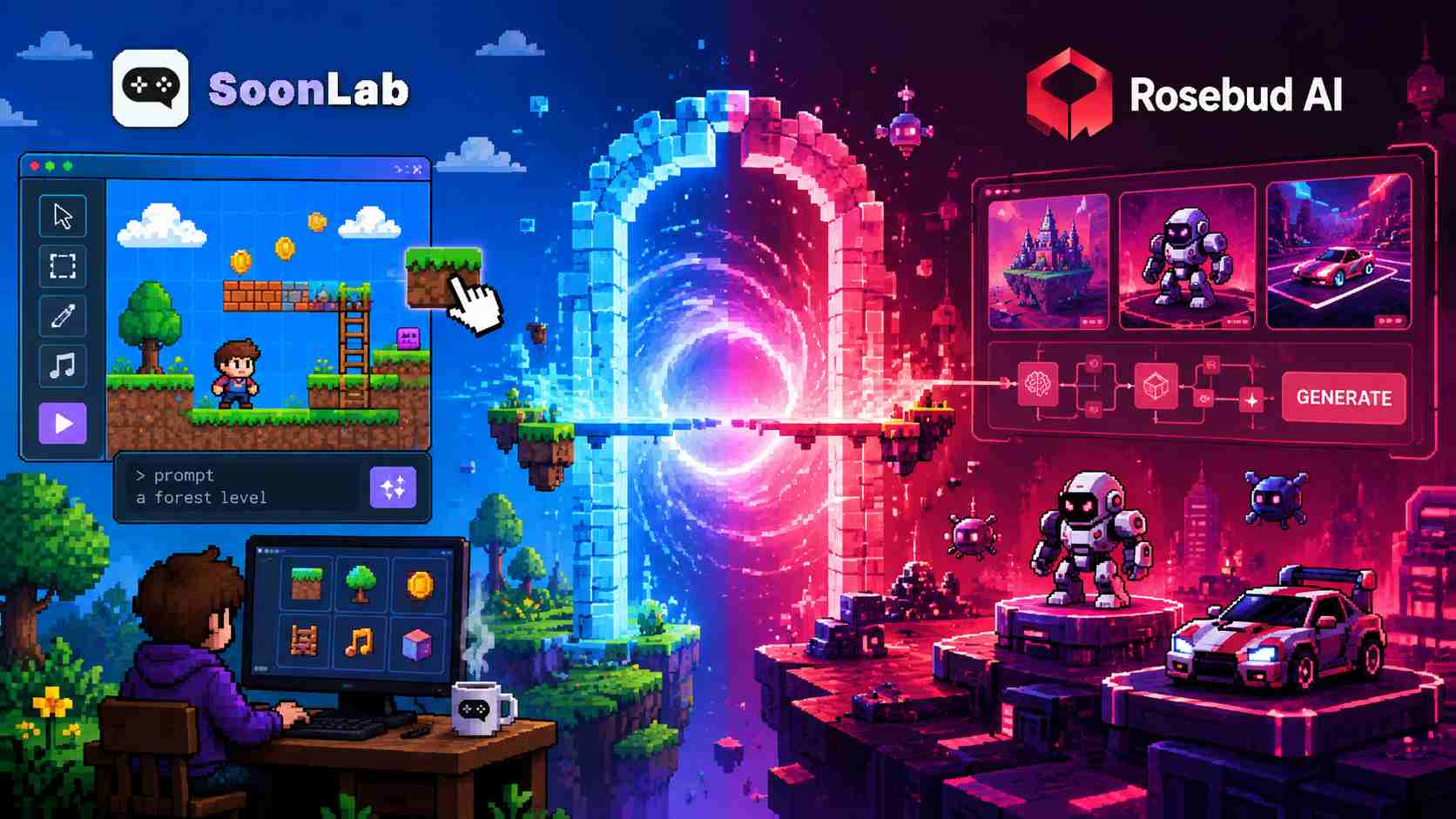
SoonLab vs Rosebud AI Features: What Can You Build?
A useful SoonLab vs Rosebud AI comparison should look at how each platform helps users create, test, improve, and share their projects.
SoonLab features focus on speed and accessibility. Users can start with a text prompt, generate a playable browser game, test it right away, and continue improving the idea with follow-up prompts. This makes SoonLab especially useful for quick experiments, simple prototypes, classroom projects, community challenges, and creators who want to move from idea to playable result without learning a full game engine.
Another important part of SoonLab is the play-and-share experience. The platform is not only built for creation, but also for discovering games made by other creators. Users can explore browser games, get inspiration from the community, and share their own creations more easily.
Rosebud AI features are broader and more creator-tool focused. It offers more dedicated paths for building complex projects, including tools and workflows around 3D creation, sprite generation, AI NPCs, visual novels, RPGs, and interactive stories. These features can be helpful when a project needs more structure, character interaction, visual assets, or long-term refinement.
In simple terms, SoonLab is stronger when you want a faster path from prompt to playable browser game. Rosebud AI is stronger when you want more creative tools for deeper projects. If you are still exploring different video game genres, you can use SoonLab to test lightweight ideas quickly, then decide whether your project needs a more complex workflow.
SoonLab vs Rosebud AI Game Types: 3D Games, RPGs, Visual Novels, and AI NPCs
Game type is one of the most important points in a SoonLab vs Rosebud AI comparison. If your idea depends on 3D spaces, RPG systems, visual novel structure, or AI NPC-driven stories, Rosebud AI has a clear advantage.
Rosebud AI is better suited for projects that need more depth, structure, and character interaction, such as:
- 3D game concepts
- RPG projects
- visual novels
- AI NPC-driven stories
- interactive fiction
- sprite-based games
- world-building projects
- character-based experiences
SoonLab is better suited for faster and lighter game ideas, especially when the goal is to create a playable browser game quickly. It works well for:
- casual browser games
- puzzle games
- simple action games
- quick prototypes
- community challenge games
- lightweight simulations
- simple RPG-style ideas
Choose Rosebud AI when the project needs more depth, story, characters, or 3D world-building. Choose SoonLab when your first priority is speed, playability, browser access, and easy sharing.
SoonLab vs Rosebud AI Workflow: From Prompt to Playable Game
Workflow matters because many users quit when the creation path feels confusing. A platform can offer many features, but the first playable result still needs to feel reachable. In this SoonLab vs Rosebud AI workflow comparison, the biggest difference is speed versus depth.
SoonLab Prompt-to-Play Workflow
SoonLab is built around a faster prompt-to-play workflow. Users can describe a game idea, generate a playable browser game, test it right away, and then improve the result with follow-up prompts.
Turn your idea into aplayable game
Describe the game you want to make, and SoonLab will help you start building it.
Create with SoonLab- Write a clear prompt for the game idea.
- Generate a playable browser game.
- Test the result immediately in the browser.
- Improve the game with follow-up prompts.
- Share the game or explore other community games for ideas.
This workflow is useful for early exploration. You might want to test a small puzzle idea, create a quick action game, build a classroom activity, or make something interactive for a social post. In these cases, speed matters more than deep customization, and SoonLab makes the first playable version easier to reach.
Rosebud AI Project Workflow
Rosebud AI uses a broader project workflow. It can also help users move from prompt to playable game, but it gives more room for refining gameplay, characters, assets, story details, and larger creative projects.
- Describe the game or creative project.
- Generate the first version.
- Refine gameplay, characters, assets, or story details.
- Use feature areas such as 3D games, RPGs, visual novels, or AI NPCs when needed.
- Keep expanding the project over time.
Rosebud AI is a better fit when you expect to keep building a larger project. It gives creators more creative room, especially for 3D games, RPGs, visual novels, and AI NPC-driven experiences. The trade-off is that the process may involve more decisions before the project feels complete.
SoonLab vs Rosebud AI Editing: Iteration and Project Refinement
AI-generated games are rarely perfect on the first try. The real test is not just whether a platform can generate a game, but whether it helps you improve the game when something feels wrong.
SoonLab is useful for quick iteration on lightweight browser game ideas. If the paddle moves too slowly, the level feels too easy, the win condition is unclear, or a game rule needs to change, users can adjust the prompt and test a new version. This makes SoonLab helpful for beginners who are still learning how to describe game mechanics clearly.
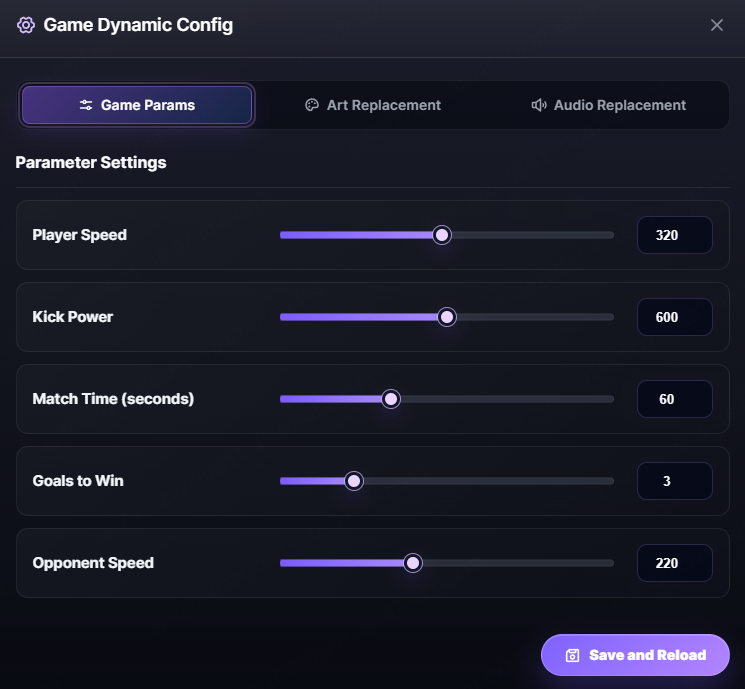
Rosebud AI is stronger for broader project refinement. If your game includes 3D spaces, RPG systems, interactive dialogue, AI NPCs, visual novel scenes, or character-driven storylines, you may need more control and more time to shape the final experience. Rosebud AI's wider toolset gives creators more room to develop these larger ideas.
In short, SoonLab is a better fit when you want to test and improve many small game ideas quickly. Rosebud AI is a better fit when you want to refine one larger project with more complex systems, characters, or story details.
SoonLab Community vs Rosebud AI Play Experience
Game creation does not end when the game is generated. For many users, the next question is whether other people can play it, react to it, and give feedback.
SoonLab's community experience is closely tied to game discovery. Users can browse categories, check featured games, explore new creations, and see what other creators are building. This makes it easier for beginners to learn by example instead of starting from a blank page.
This also matters for content creators, teachers, and community builders. A simple browser game can become a social post, a classroom activity, a community challenge, or a quick interactive demo. The easier it is to share and play, the easier it is to test whether the idea is fun.
Rosebud AI also supports game discovery and project exploration. Its play and remix-style experience can help users learn from other projects and expand their own ideas.
SoonLab vs Rosebud AI Pricing and Credits
Pricing is an important part of the SoonLab vs Rosebud AI comparison because both platforms use limits around credits, prompts, model access, or paid plans. The exact prices and free limits may change over time, so the numbers below should be checked against each platform's latest pricing page before publishing.
| Platform | Free Plan | Lowest Paid Plan | Highest Public Plan Found |
|---|---|---|---|
| SoonLab | $0/month. Includes a basic AI model trial, game publishing and sharing. | Starter plan: $9.99/month, with 3,000 points and about 20 game creations, based on public pricing listings. | Pro plan: $49.99/month, with 25,000 points and access to advanced models, code export, remix support, commercial use, and priority features, based on public pricing listings. |
| Rosebud AI | 8,000 credits per week for the free tier. | Indie Dev plan: $15/month with 100,000 credits, based on Rosebud's public blog information. | Pro plan: $50/month with 1,000,000 credits and access to advanced features, based on Rosebud's public blog information. |
SoonLab pricing is easier to understand if you think in points. Users spend points when they generate or revise games, so the real value depends on how many playable browser games they want to create and how often they need to edit them. The free plan is useful for trying the basic model and publishing games to the community, while paid plans are better for users who need more points, faster generation, advanced models, code access, remix support, or commercial use.
Rosebud AI pricing is easier to understand if you think in credits or prompts. Its free access is useful for testing the platform, but larger projects can use credits quickly because every generation, edit, character update, or asset-related request may consume part of the allowance. Paid plans are more suitable for creators who want to keep refining 3D games, RPGs, visual novels, AI NPCs, or interactive story projects.
It is also important to note that SoonLab points and Rosebud AI credits are not the same unit. Creating one game may cost different amounts on each platform, depending on the model, project type, and editing needs. So the better comparison is not which plan gives more points or credits, but which plan lets you create, test, edit, and publish more complete games for your actual use case.
FAQs About SoonLab vs Rosebud AI
What is the main difference between SoonLab and Rosebud AI?
The main difference is product focus. SoonLab focuses on fast browser game creation, instant play, and sharing. Rosebud AI offers a broader environment for 3D games, RPGs, visual novels, AI NPCs, interactive stories, and creative apps.
Which is easier to use, SoonLab or Rosebud AI?
SoonLab is easier for users who want a short path from idea to playable browser game. Rosebud AI is also beginner-friendly, but its wider feature set may take more time to explore.
Can SoonLab and Rosebud AI both create browser games?
Yes. Both platforms can help users create browser-based games. SoonLab places browser game creation and sharing at the center of the experience, while Rosebud AI supports browser games as part of a broader creative platform.
Is Rosebud AI better for 3D games and RPGs?
Yes. Rosebud AI has stronger positioning around 3D games, RPGs, visual novels, AI NPCs, sprite generation, and interactive stories. These features make it a better fit for complex creative projects.
Which tool is better for quick browser game ideas?
SoonLab is usually the better fit for quick browser game ideas because its workflow is more direct. You can describe a game, generate it, play it, and share it without learning a larger toolset first.
Which tool gives more control for complex projects?
Rosebud AI gives more room for complex projects, especially if you are working on 3D games, RPGs, visual novels, AI NPCs, or interactive stories. SoonLab is better for lighter projects and faster iteration.
How do SoonLab pricing and Rosebud AI pricing compare?
Pricing and free limits can change over time. Compare credit usage, free access, model availability, generation limits, publishing options, export rights, and the type of game you want to create before choosing.
Is SoonLab a Rosebud AI alternative?
Yes, SoonLab can be a Rosebud AI alternative for users who mainly want fast browser game creation, instant play, and easy sharing. Rosebud AI remains stronger for 3D, RPG, visual novel, and AI NPC-focused projects.
Should beginners choose SoonLab or Rosebud AI?
Beginners should choose SoonLab if they want to create a playable browser game quickly. They should choose Rosebud AI if they want to explore a broader creative platform with more options for 3D games, RPGs, visual novels, and AI NPCs.
Conclusion
SoonLab and Rosebud AI are both useful AI game makers, but they are built for different users.
SoonLab is the better choice if you want a faster and simpler way to turn a game idea into a playable browser game. It is especially good for beginners, casual creators, students, content creators, and users who care about instant play, sharing, and community discovery.
Rosebud AI is the better choice if you want a broader creative platform with stronger support for 3D games, RPGs, visual novels, AI NPCs, interactive stories, and more complex project refinement.
The best choice is not the tool with the most features. It is the tool that matches your game idea, your patience level, and how much control you need after the first version is generated.
If your goal is to create and share a small playable game quickly, start with AI game maker SoonLab. If your goal is to build a deeper character-driven or world-based project, Rosebud AI may be the better fit.