
I've watched AI game creation tools evolve rapidly, and one question keeps coming up: "What's a good alternative to Rosebud AI?"
Rosebud opened people's eyes to what's possible—you type a description, and a game appears. That's powerful. But the game dev world has grown, and if you're looking for alternatives, you deserve to know what actually competes.
In this guide, I'll walk you through the best Rosebud AI alternatives based on real research—not just listing tools, but explaining what each one does well and who it's for.
What Is Rosebud AI?
Rosebud AI is one of the best AI game makers that uses AI to convert text descriptions into playable games. You don't need to code. Describe your idea—"a platformer where a fox collects gems in a forest"—and Rosebud generates the mechanics, visuals, and logic.
Key features:

The platform uses "vibe coding"—you iterate with AI through conversation, refining your game step by step.
Why Look for Rosebud AI Alternatives?
Ready to move beyond Rosebud? Here's why you might need an alternative:
1. You need better export options. Rosebud is browser-only. If you want to export your game to desktop platforms or mobile stores, you'll need a tool with stronger publishing capabilities.
2. You're hitting Rosebud's limits. Rosebud handles prototyping well. But if you need more complex game mechanics, custom assets, or full engine control, the walls close in.
3. Pricing clarity. Some alternatives offer clearer credit systems or free tiers with better value.
4. Specific workflow needs. Maybe you want a different AI approach, stronger community support, or specialized features for 2D or 3D games.
7 Best Rosebud AI Alternatives (Detailed Reviews)
Quick Comparison of Rosebud AI Alternatives
1. Construct 3 — Best Proven Browser-Based Game Maker
Construct 3 is one of the most established browser-based game creation tools, with a proven track record in the industry.
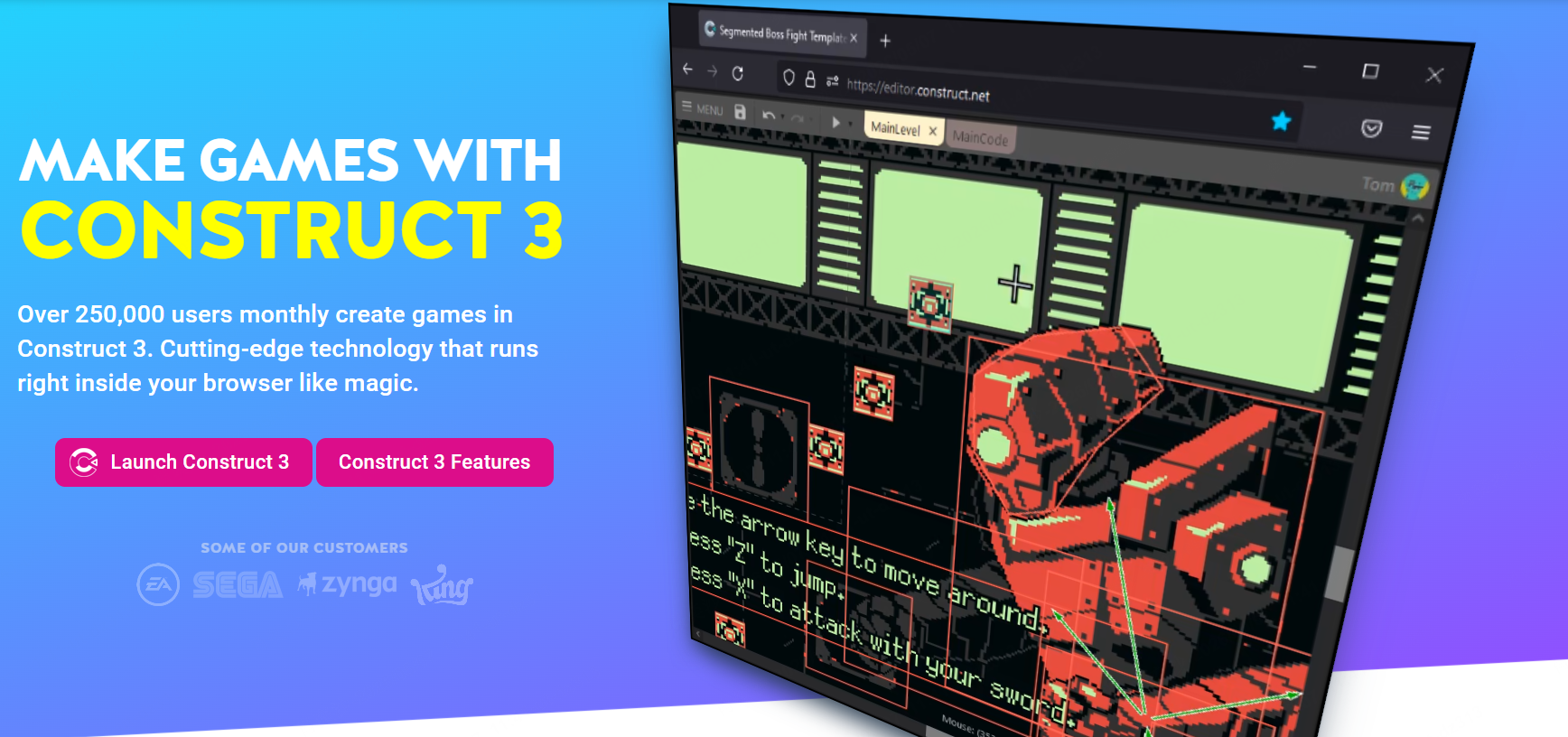
What it does: Create 2D and 3D games using visual event sheets—no coding required. You can also add JavaScript for custom logic when needed.
What makes it stand out: The engine is mature with extensive documentation and a large marketplace of assets and plugins. Many commercial games have shipped with Construct. The editor runs entirely in your browser—nothing to download.
Best for: Users who have some knowledge of JavaScript and wish to create games without coding.
Pricing: Free tier available. Personal license starts at $16/month for export capabilities.
2. GDevelop — Best Open-Source AI Game Maker
GDevelop is a completely free, open-source game engine that's been around since 2008. Recently, it added AI assistance that makes it a legitimate Rosebud alternative.
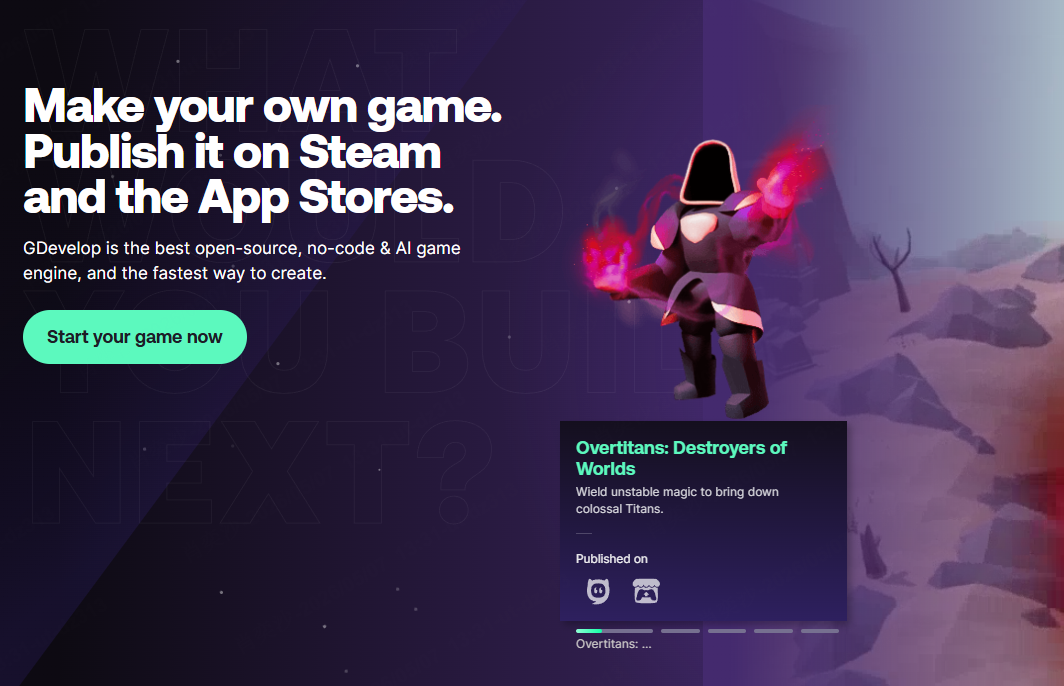
What it does: GDevelop has two AI features: an AI agent that builds game features for you automatically, and a chat assistant that answers questions about game development. Unlike general AI tools like ChatGPT, GDevelop AI is built specifically for game creation.
What makes it stand out: The community is huge and established with 100+ templates. The event system (visual logic) is intuitive for non-programmers. It's open source, meaning it will never disappear or change its business model.
Best for: Creators who want AI assistance within a proven, stable engine—and who might outgrow pure AI-only tools. Of course, this also applies to users who wish to share their own original games on Steam.
Pricing: Completely free and open source.
3. Flowlab — Best Visual Game Creator with Community
Flowlab is a browser-based visual game creator that's been around since 2013, with a dedicated community of creators.
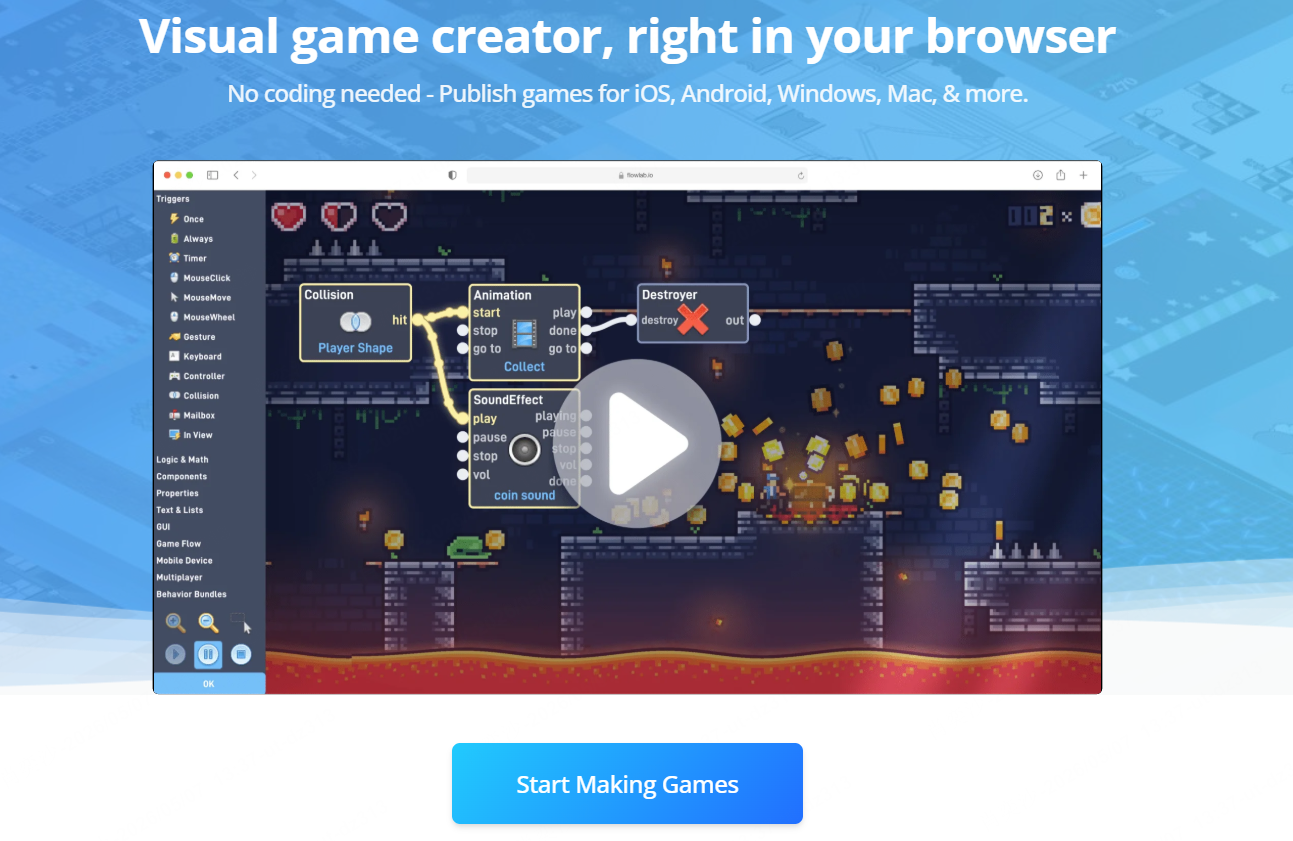
What it does: Create 2D and 3D games using a drag-and-drop interface with visual logic blocks. Publish directly to web, mobile (iOS/Android), and desktop.
What makes it stand out: The community is active with regular game jams ("Flowjams"). The sprite editor is surprisingly well-made for a browser-based tool. Games created with Flowlab can be exported and published commercially.
Best for: Educators, beginners, and creators who want a visual approach with community support.
Pricing: Free tier with limited storage. Paid plans from $9/month for export and unlimited features.
4. SoonLab — Best for Community-Driven Game Creation
SoonLab brings something different to the table. While Rosebud focuses purely on creation, SoonLab builds an entire ecosystem around creator community. If you want a deeper side-by-side breakdown, you can also read our SoonLab vs Rosebud AI comparison and SoonLab review.
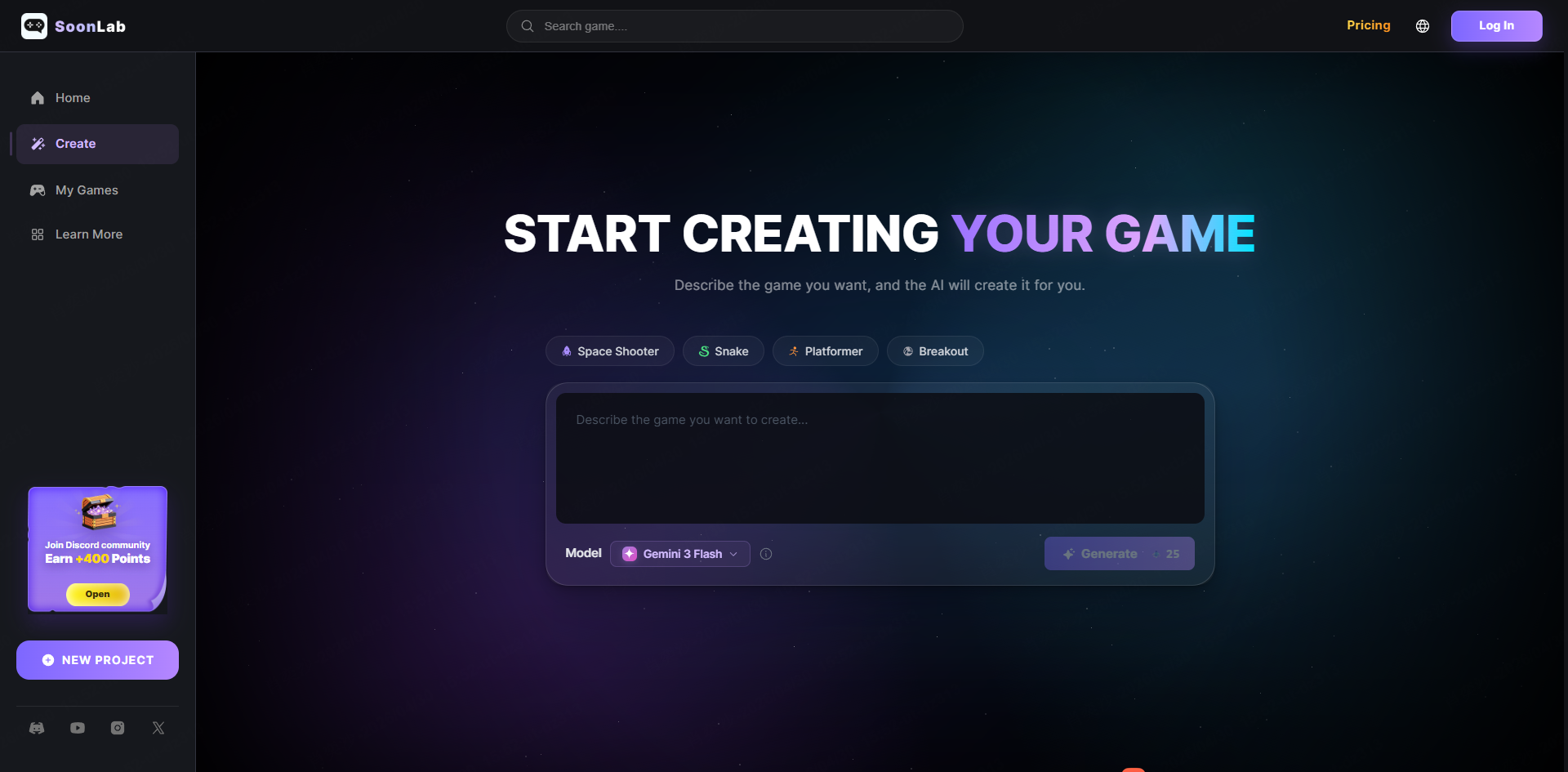
What it does: SoonLab is an AI-powered game maker that lets you describe your game concept and generate a playable result. You can create Space Shooters, Snake games, Platformers, Breakout, RPGs, and more—all through text prompts.
What makes it stand out: The community aspect sets SoonLab apart. You can browse thousands of games created by other users, play them instantly in your browser, and get inspired before making your own. This isn't just a creation tool—it's a creative playground.
The point system is transparent. You get 200 points to start experimenting, and generation costs are clear before you commit. Games are playable instantly in-browser. No downloads, no installs. Share your creations with a link.
Best for: Creators who want to explore what's possible, get inspired by community work, and start building without a steep learning curve.
Pricing: Free tier with 200 points. Paid plans unlock more points.
5. Aippy — Best Mobile-First AI Game Platform
Aippy is one of the few AI game makers that truly prioritizes mobile. Built by MWM (Mobile Entertainment), Aippy brings AI-powered game creation to your phone.
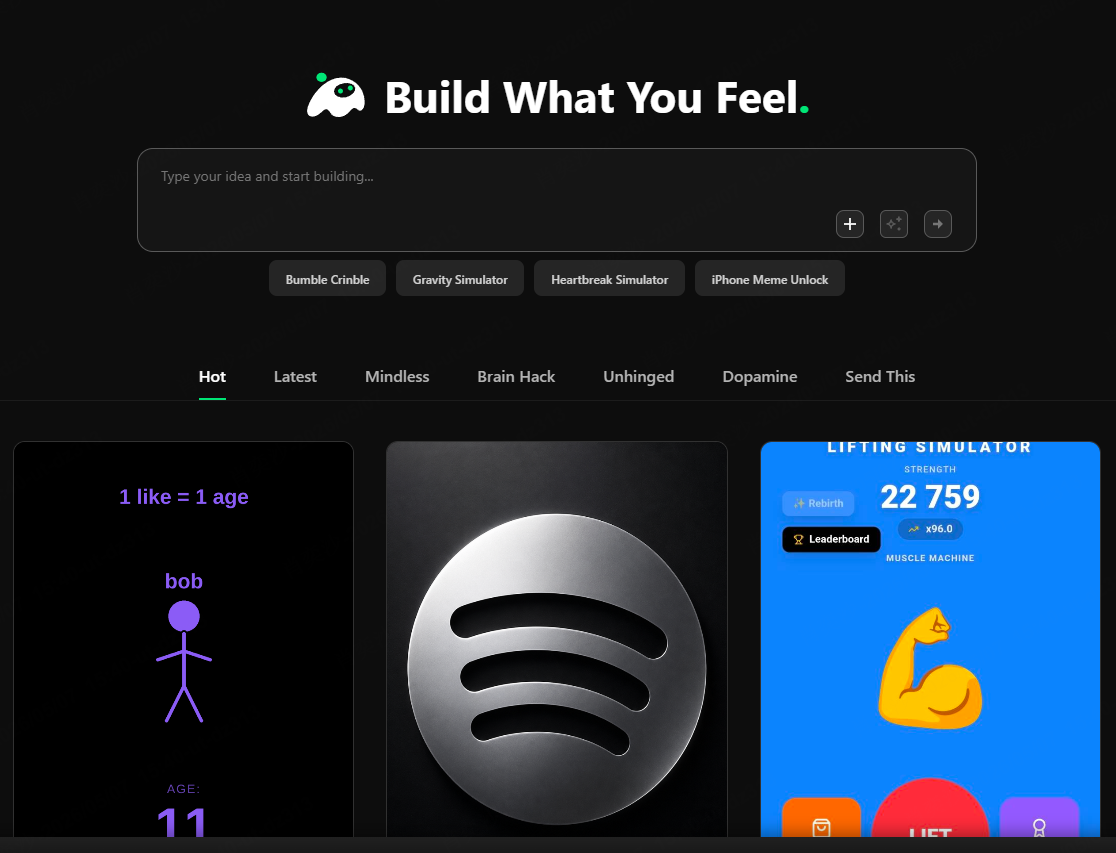
What it does: Aippy lets you create games using natural language descriptions. You can also speak to generate prompts, making it incredibly accessible for mobile users who don't want to type.
What makes it stand out: Mobile-first design means you can create games on the go. The platform has a built-in community where you can explore games created by others. Aippy holds regular events and offers free credits to new users. The update frequency is high—they actually listen to user feedback.
Best for: Mobile users who want to create and play games on their phones. Great for quick sessions and on-the-go creativity.
Pricing: Free credits available. Specific pricing varies for premium features.
6. Upit — Best AI Game Creator with Voice Support
Upit is backed by FRVR, a major player in the mobile arcade game space. This gives it serious credibility—they're not just another startup.
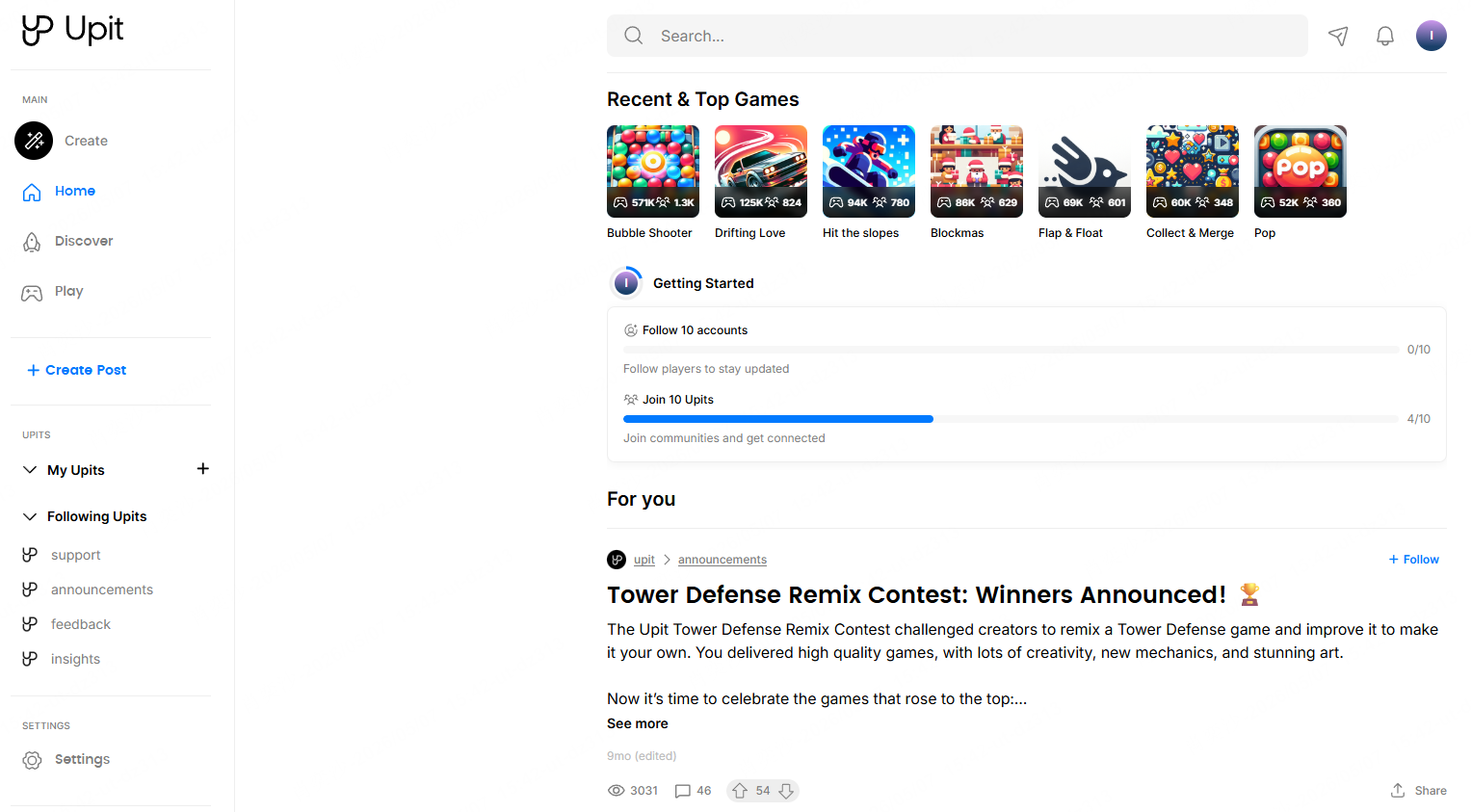
What it does: Upit lets you create games using text or voice commands. Their AI assistant (named AVA) helps guide you through the creation process, making it beginner-friendly.
What makes it stand out: The voice-to-game feature is genuinely useful. Instead of typing, you can describe your game idea out loud and watch it come to life. FRVR's backing means there's real infrastructure behind it. The platform hosts thousands of community-created games, and there are regular game creation competitions with prize money (up to $2,500).
Best for: Creators who prefer voice input, or anyone who wants a platform backed by an established gaming company.
Pricing: Free tier available. Specific pricing varies.
7. Jabali — Best for Fast AI Prototyping
Jabali has gotten significant attention because it received investment from Sony and other major VCs. That's the kind of validation that means they're building something real.
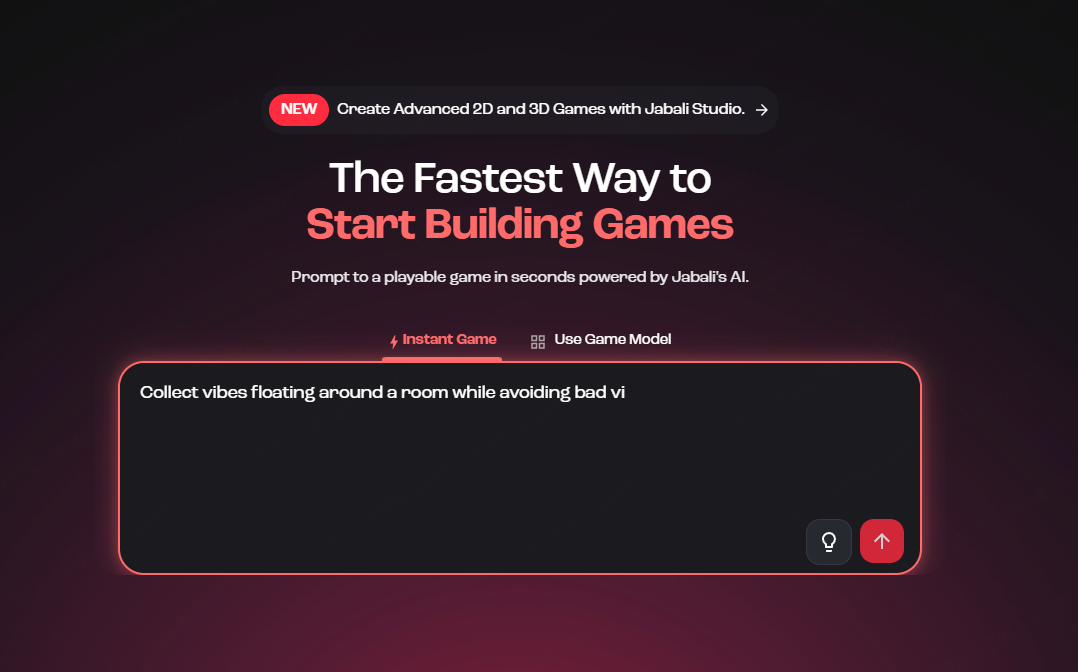
What it does: Jabali transforms text prompts into fully playable games. No coding required—just describe your game concept and let the AI handle the rest.
What makes it stand out: Sony's backing (along with Bitkraft Ventures and Sapphire Ventures) gives it long-term viability that many competitors lack. The platform is designed for fast prototyping—if you have an idea, you can have a playable game quickly. It's been covered by major publications like Variety, which suggests real momentum.
Best for: Creators who want a serious platform with investor backing and fast prototyping capabilities.
Pricing: Free tier with limited features during beta. Full access requires paid plans.
How to Choose the Right Rosebud AI Alternative
FAQs
What's the main difference between these Rosebud AI alternatives?
Rosebud, SoonLab, Aippy, Upit, and Jabali are AI-native platforms where AI generates your game from text or voice. GDevelop, Construct 3, and Flowlab are game engines where AI assists but doesn't replace core development workflows.
Which Rosebud alternatives can export to mobile?
Flowlab and Aippy export to iOS and Android. Upit supports mobile and web. GDevelop and Construct 3 support mobile export with paid plans.
Do I need coding skills to use these Rosebud AI alternatives?
None of these require coding. All are designed for non-coders.
Which is fastest for prototyping?
SoonLab, Aippy, Upit, and Jabali generate playable games from text or voice descriptions in minutes.
What's the free tier winner?
GDevelop is completely free and open source. Aippy, Upit, and SoonLab all offer generous free tiers.
Conclusion
Rosebud AI showed millions of people that game creation doesn't require years of coding. That's its legacy. But the landscape has grown, and you have real choices.
If you want a community-driven platform with transparent pricing, SoonLab offers a fresh take on AI game creation.
If you want a free, stable engine with built-in AI, GDevelop delivers.
If you want mobile-first AI creation, Aippy and Upit have you covered.
If you want investor-backed technology with fast prototyping, Jabali is worth exploring.
The right choice depends on your goals—prototype? Ship? Learn? Publish? Figure out what matters most, and pick a Rosebud AI alternative that gets out of your way.