Puzzle Game Maker: Create Playable Puzzles from a Prompt
Turn a puzzle idea into a playable browser game with SoonLab's AI puzzle game maker. Describe the rules, goal, clues, controls, and visual style, then generate, solve, refine, publish, or download your game without coding.
0/10000
Puzzle game inspiration sources







Play Puzzle Games Made with SoonLab AI
Try puzzle games created with SoonLab, including tile swapping, logic deduction, number merging, word search, and sequence challenges. Notice how each game explains its rule, shows progress, and confirms when the puzzle is solved.
Mystery Grid
Play Game
One Stroke: Countdown
Play Game
2048 Kubes
Play Game
Track Tiles
Play Game
Spellgarden Word Search
Play GameWhat Is a Puzzle Game Maker?
A puzzle game maker helps you turn a rule-based challenge into an interactive game. Unlike a printable worksheet or a tool that only cuts an image into jigsaw pieces, SoonLab can generate playable logic, word, matching, tile, number, physics, and puzzle-adventure mechanics. You describe what the player can change, what must stay fixed, how the solved state works, and what feedback appears after each move. AI handles the first playable build, while you decide whether the puzzle is fair, understandable, and satisfying to solve.
Create a Puzzle Game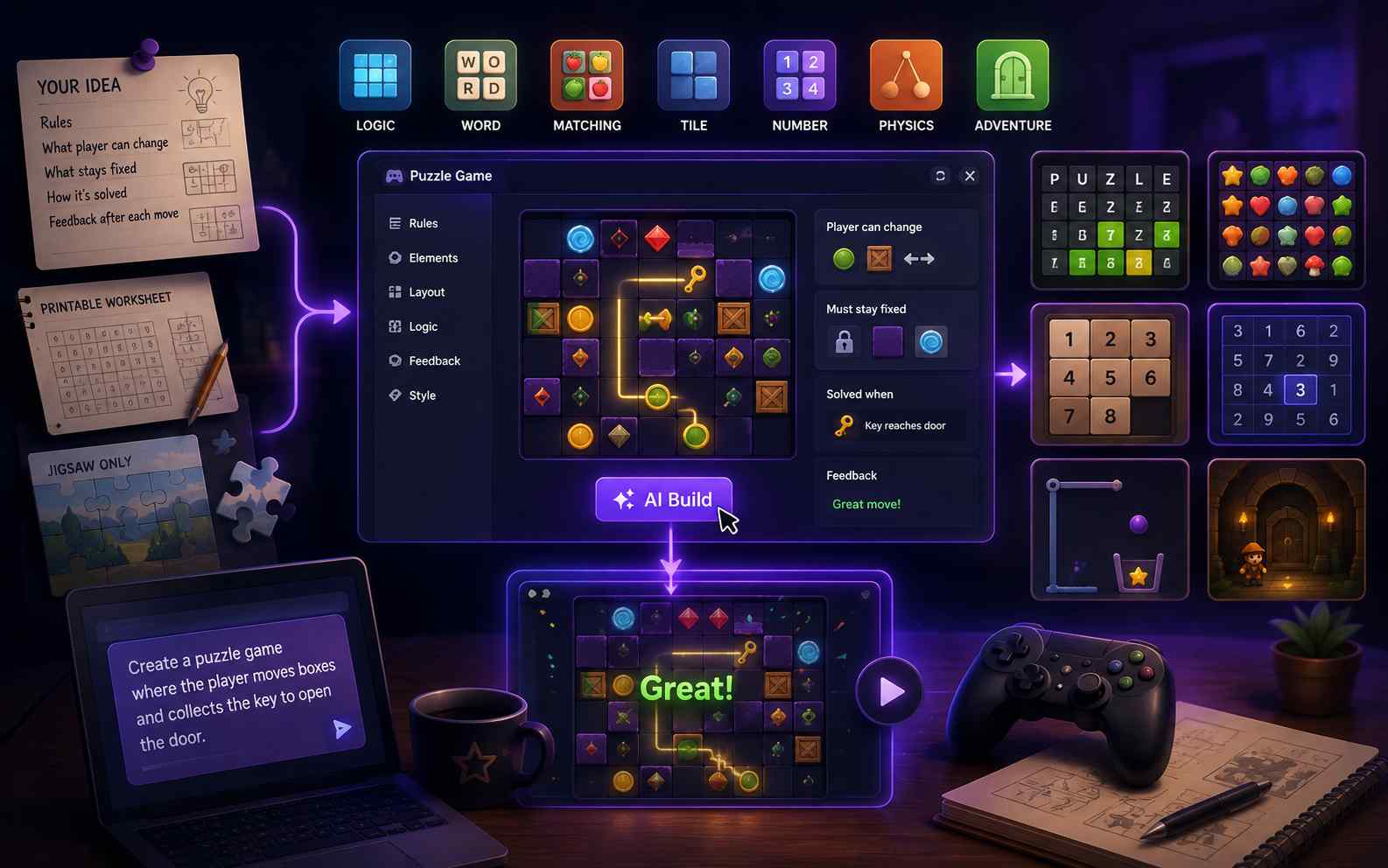
Why Use SoonLab to Make Puzzle Games?
Build Playable Rules, Not Just a Puzzle Board
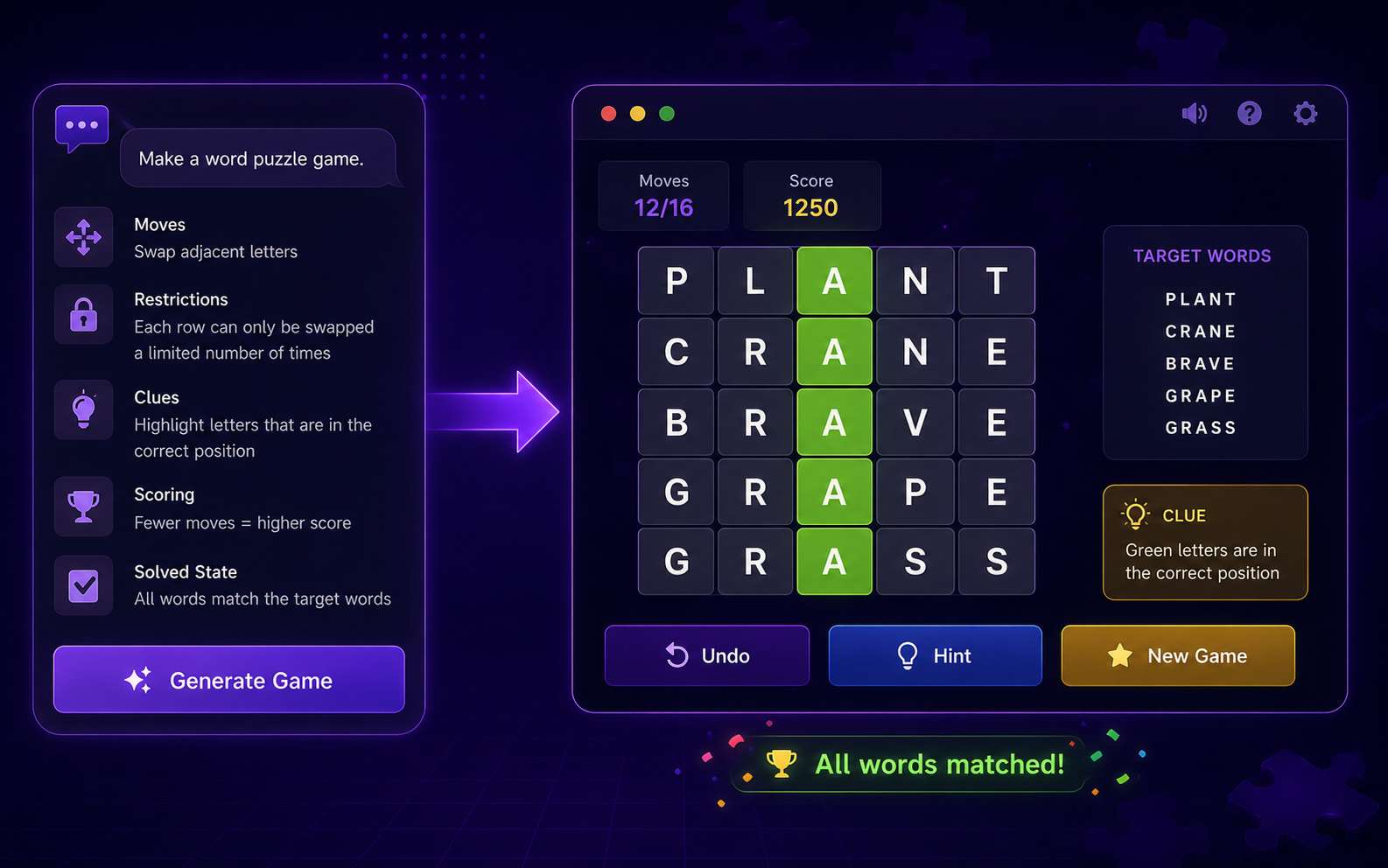
Describe moves, restrictions, clues, scoring, and the solved state in plain language. SoonLab turns those instructions into a game the player can interact with instead of a static puzzle image.
Test Whether the Puzzle Can Be Solved
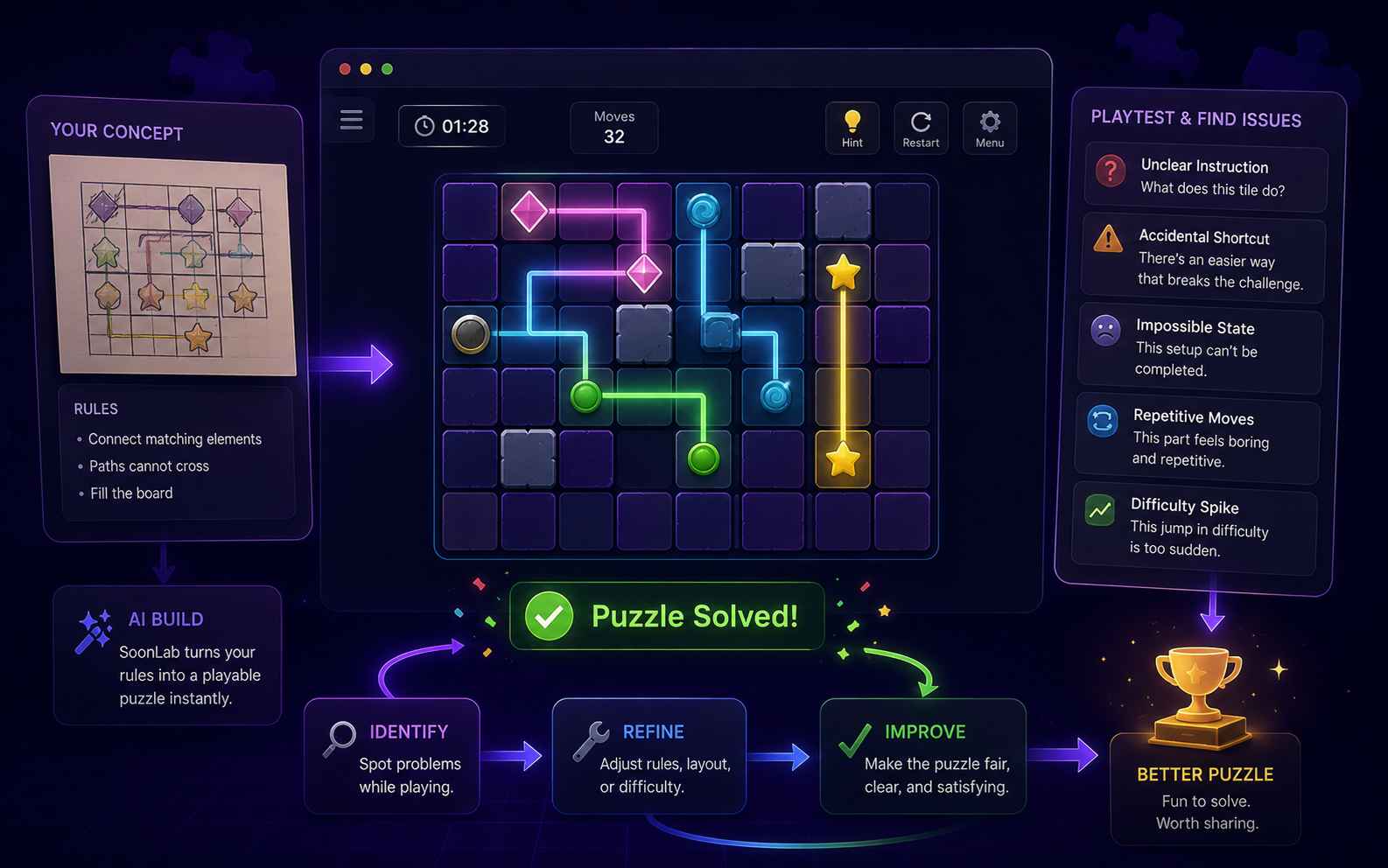
Open the generated version and solve it from beginning to end. Playtesting reveals unclear instructions, accidental shortcuts, impossible states, repetitive moves, and difficulty spikes that are easy to miss in a written concept.
Refine Hints, Feedback, and Difficulty
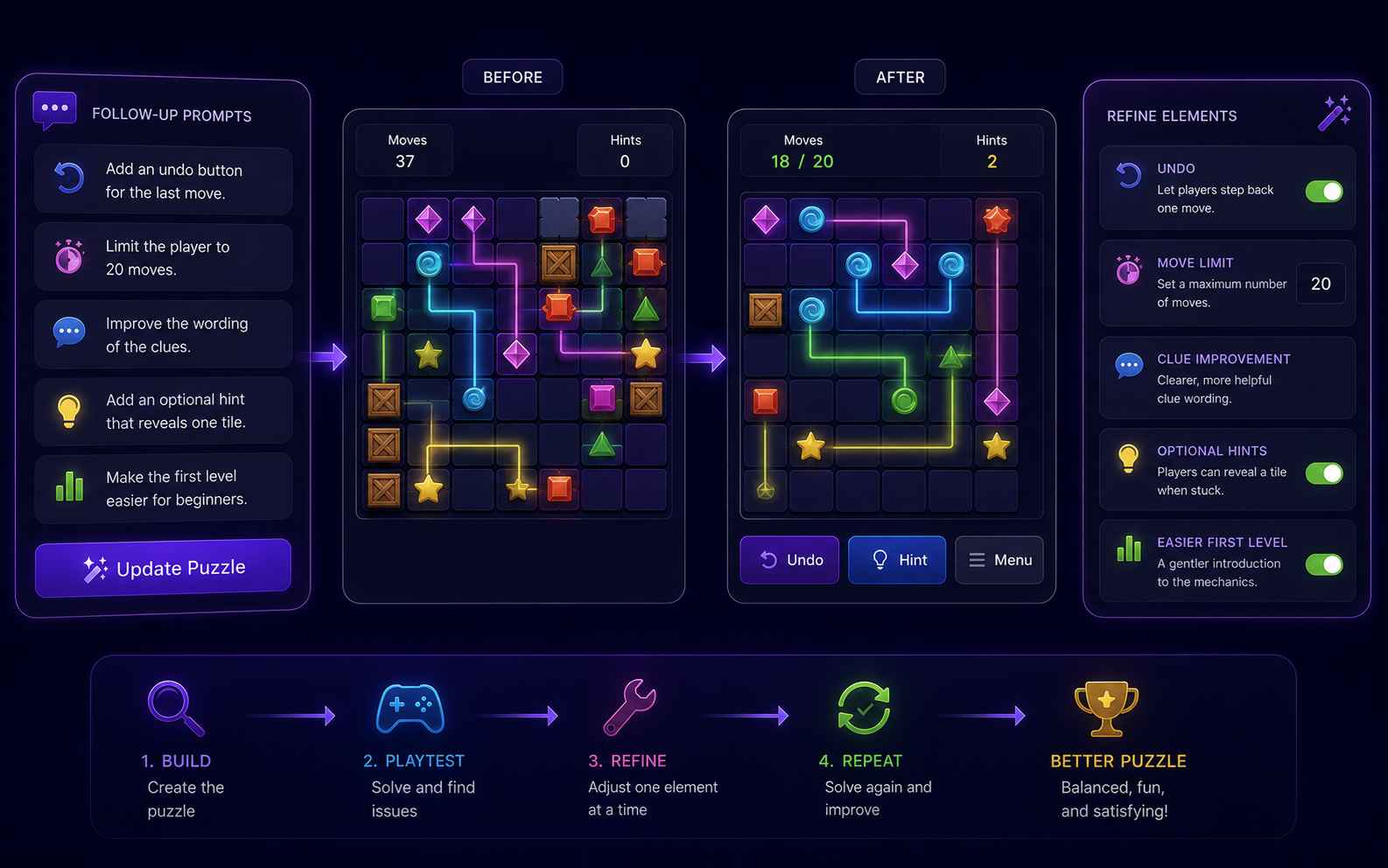
Use follow-up prompts to add an undo button, limit moves, improve clue wording, introduce optional hints, or create a gentler first level. Change one element at a time, then solve the updated puzzle again.
Publish and Share a Browser Puzzle
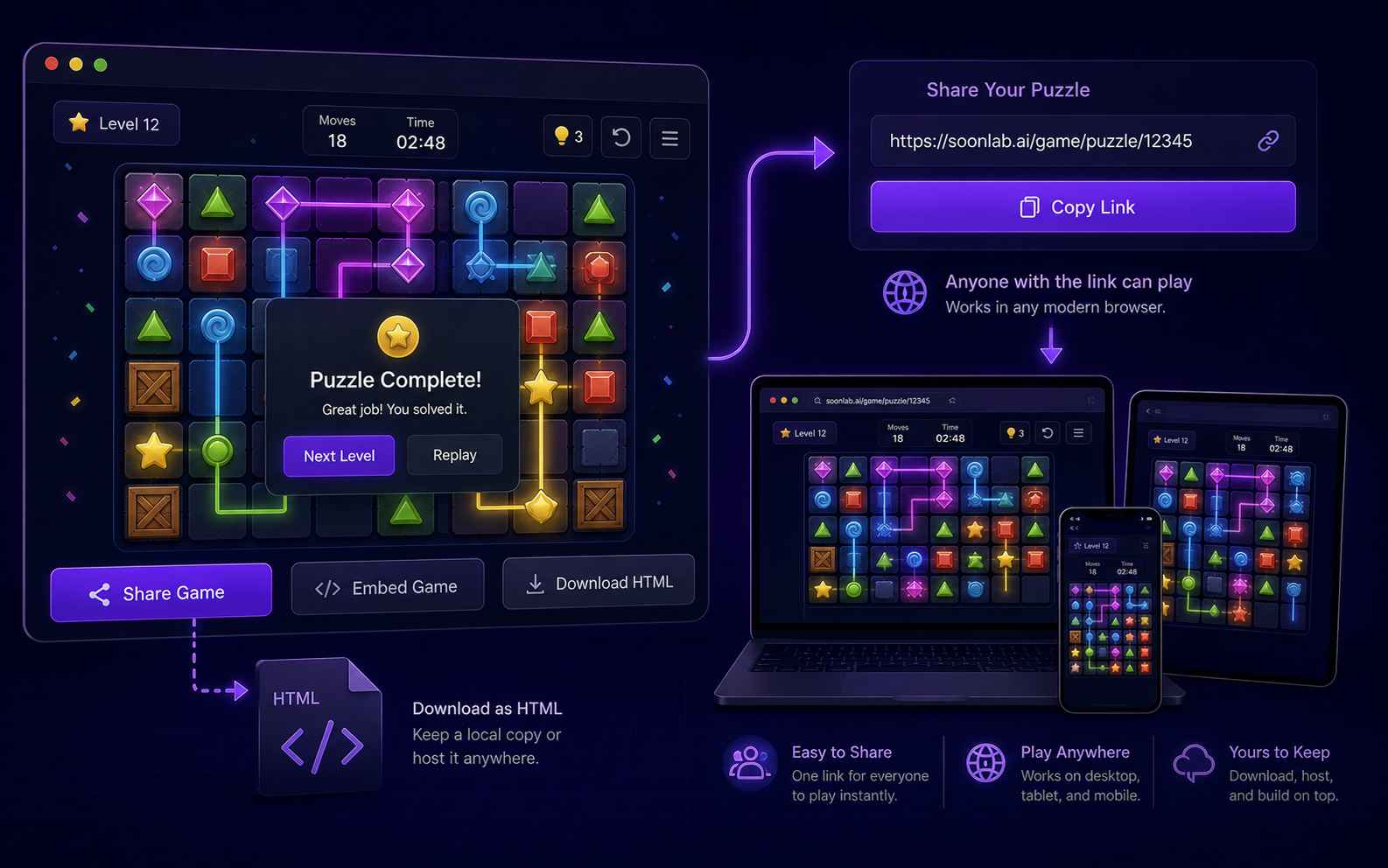
Let other people play from a shared game page in a supported browser. You can also download the project as an HTML file when you want to keep a local copy or host it elsewhere.
What Puzzle Games Can You Make?
Logic and Deduction Puzzles
Create clue grids, switch puzzles, route-planning challenges, code breakers, and rule-elimination games. Define every allowed move and make sure the clues lead to one understandable solution.
Create a Puzzle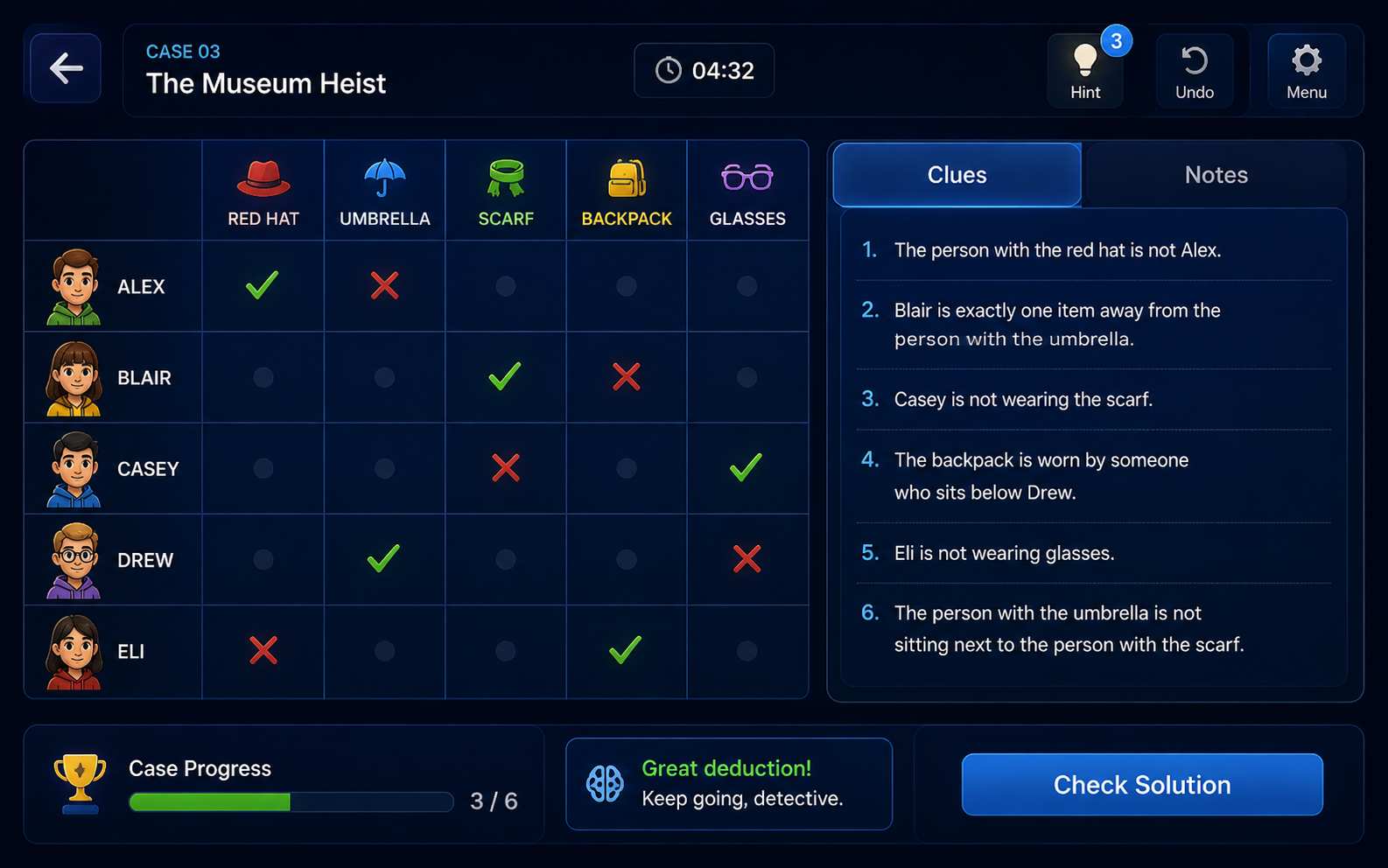
Tile, Block, and Number Puzzles
Make sliding tiles, block pushing, number merging, rotation puzzles, mazes, and spatial arrangement games. Add move counters, undo controls, restart options, and clear completion feedback.
Create a Puzzle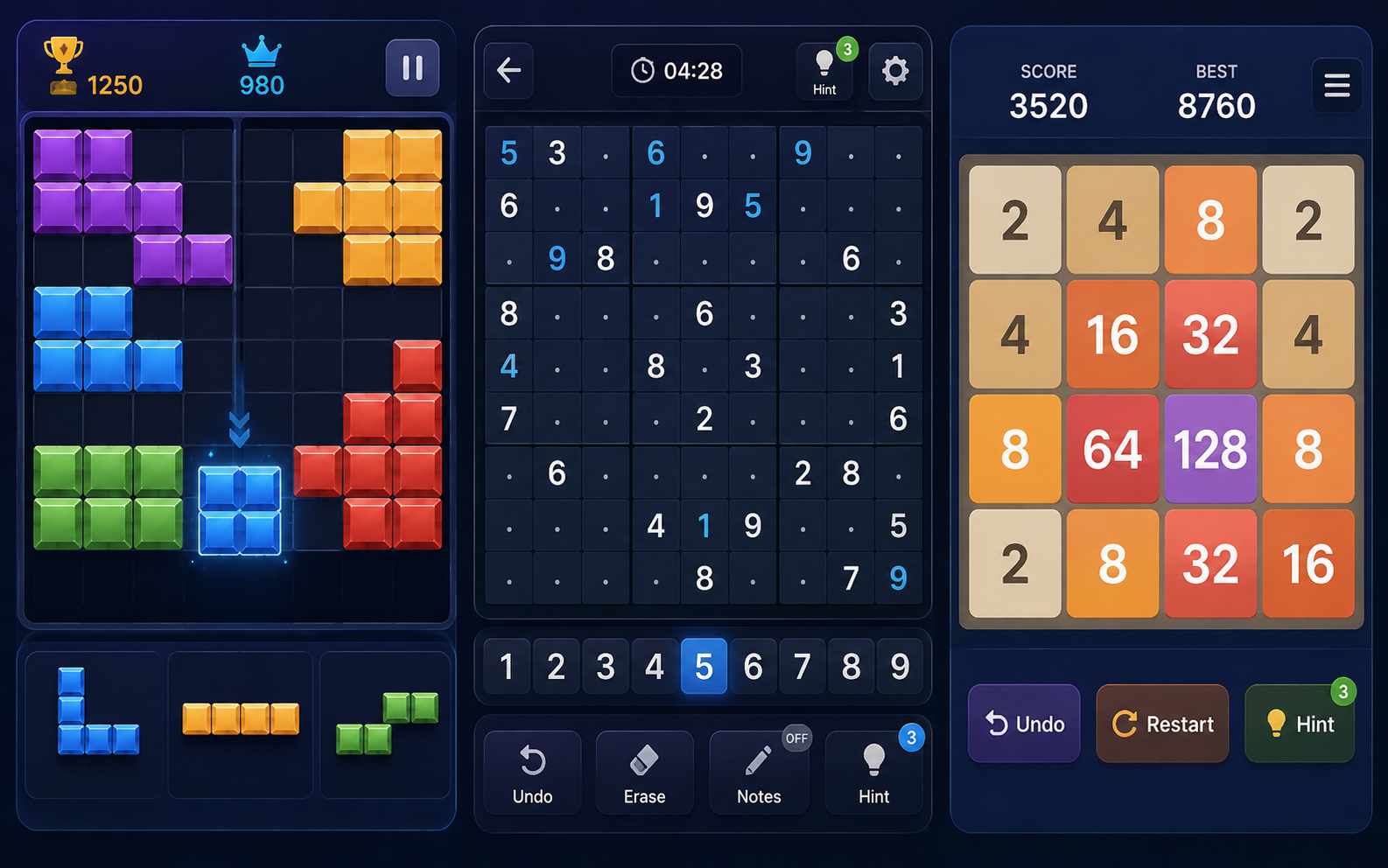
Word, Matching, and Memory Games
Build word searches, category sorting, pair matching, spelling challenges, and memory games. Use readable text, clear selection states, immediate feedback, and a visible progress counter.
Make a Word Search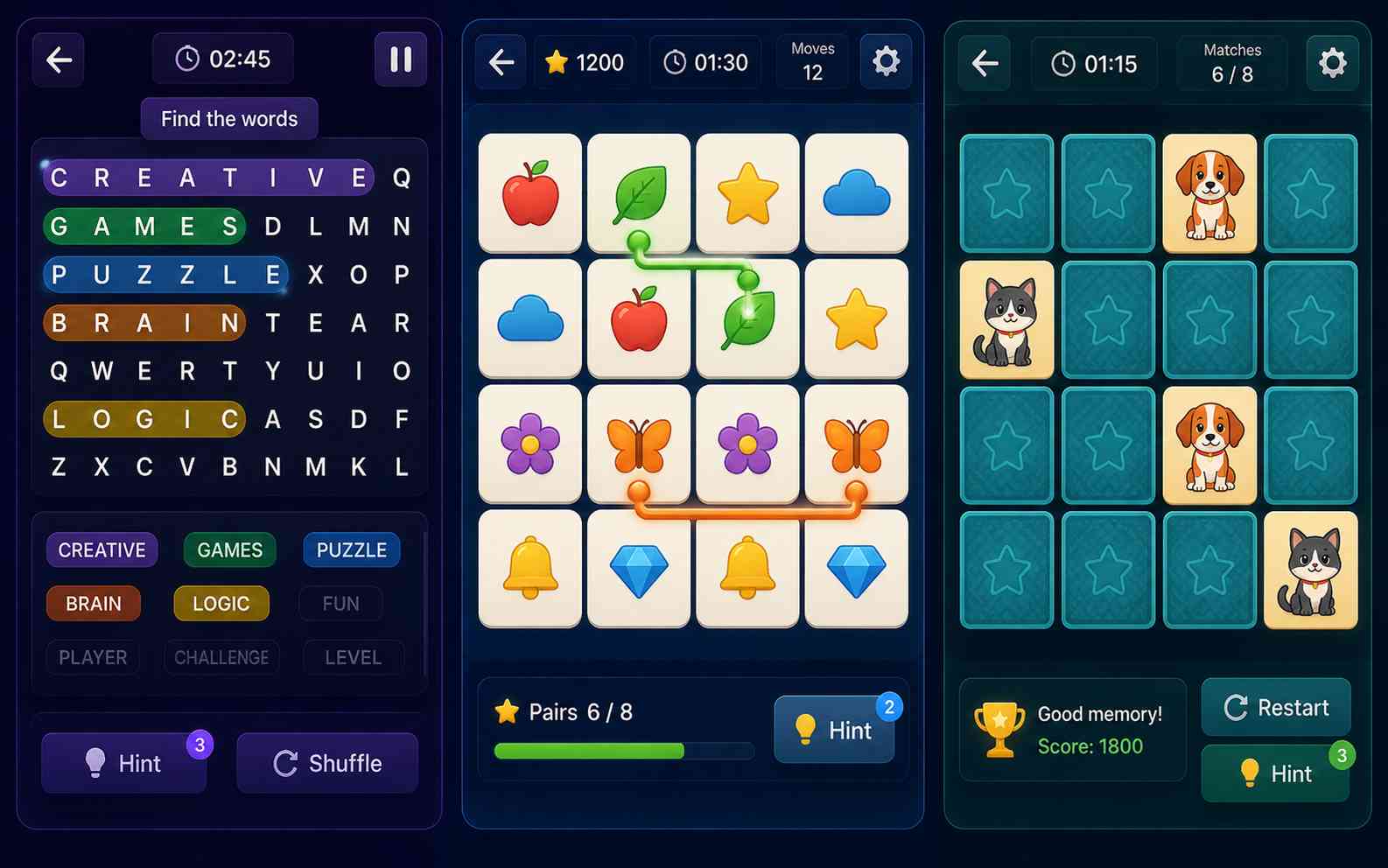
Puzzle Adventures and Platformers
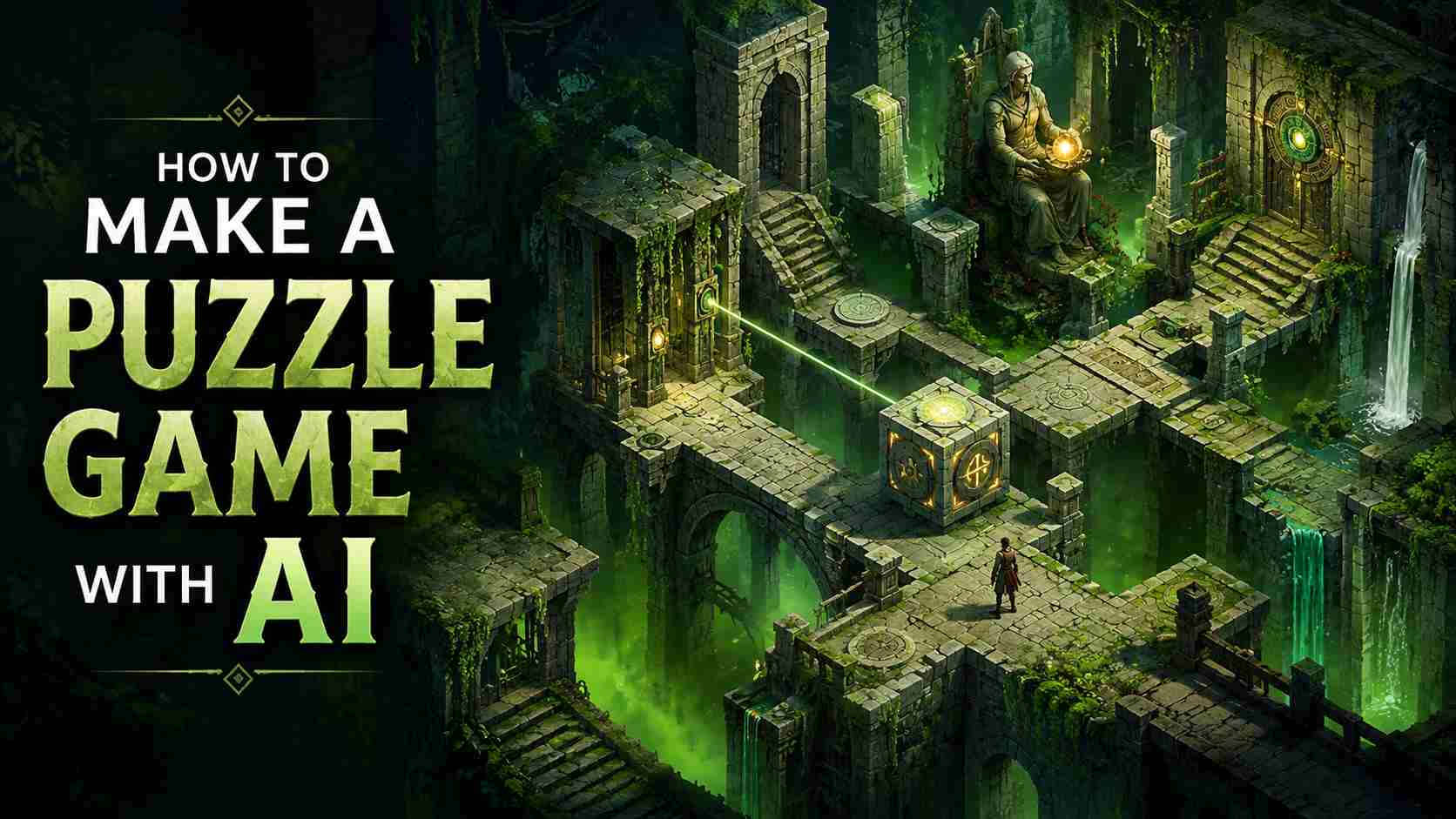
Combine exploration or movement with locked doors, switches, movable objects, clues, and environmental riddles. Keep each room focused on one idea before combining mechanics in later levels.
Create a Puzzle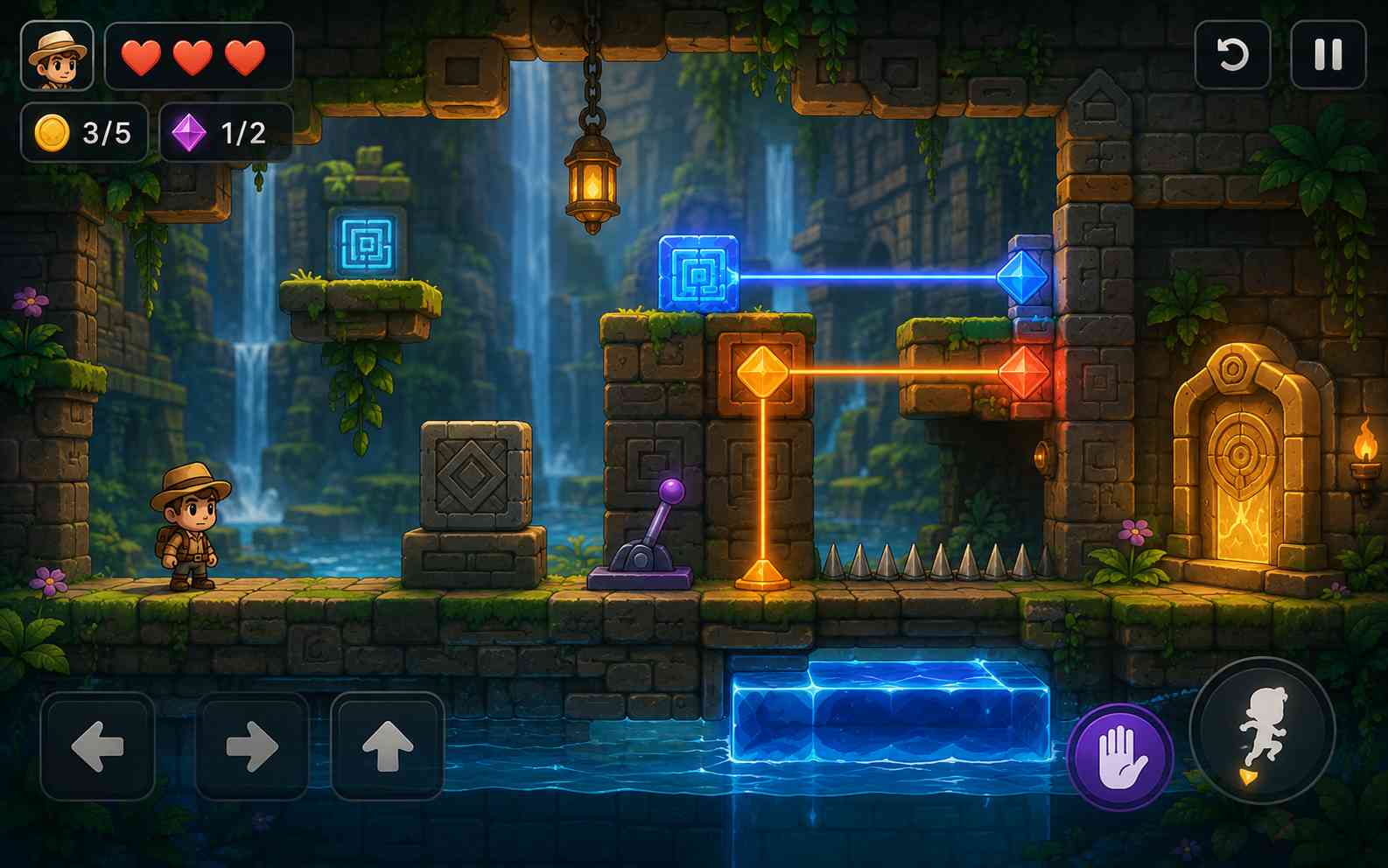
How to Make a Puzzle Game with AI
A strong puzzle starts with one precise rule, a verifiable solution, and feedback that helps players understand the result of every move. Generate a small first level, solve it yourself, and expand only after the core challenge works.
Step1.Define the Rule and Solved State
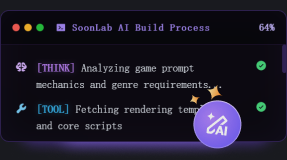
Start with one central rule. Explain what the player can click, drag, move, swap, type, or rotate; what actions are forbidden; and exactly what the completed puzzle should look like. Include the controls, theme, board size, and whether hints, lives, or move limits are needed.
Step2.Generate and Solve the First Level
Generate the browser game, read the instructions as a new player would, and complete one full solution. Check that every input works, the initial state is solvable, progress is visible, and the game recognizes the correct ending.
Step3.Remove Shortcuts and Tune the Challenge
Ask for focused revisions such as a better hint, a stricter move rule, an undo button, larger mobile controls, or a new level with one extra complication. Solve the puzzle after each change, then publish, share, or download the finished version.
Puzzle Game Prompts You Can Copy
Effective puzzle prompts define legal moves, the starting state, the exact solution, and the feedback shown after each action. Copy an example, replace its theme or mechanic, and keep the first puzzle small enough to solve repeatedly during testing.
| Prompt idea | Prompt | Difficulty | Best for | Style | Copy |
|---|---|---|---|---|---|
| Lantern Logic Grid | Create a 5-by-5 logic puzzle set in a moonlit garden. Clicking a lantern toggles that lantern plus the lanterns directly above, below, left, and right. Start from a guaranteed solvable pattern. The goal is to light every lantern in 12 moves or fewer. Show the move count, include undo, reset, and optional hint buttons, explain the toggle rule before play, and display a clear solved animation. Use large touch-friendly lanterns and a cozy illustrated night-garden style. | Beginner | Logic puzzles | Cozy night garden | |
| Clockwork Crate Escape | Create a top-down box-pushing puzzle inside a small clockwork workshop. The player moves with WASD, arrow keys, or a swipe control and must push three gear crates onto three marked pressure plates. Crates cannot be pulled, moved through walls, or pushed when another crate blocks the next tile. Use a level that is solvable without perfect timing. Add move and push counters, undo, restart, a short rules panel, and a success screen. Use a warm brass-and-wood visual style. | Intermediate | Spatial puzzles | Brass workshop | |
| Mosaic Shift | Create a sliding-tile puzzle with a 4-by-4 grid, 15 illustrated ceramic tiles, and one empty space. The player clicks or taps a tile beside the empty space to slide it. Shuffle only with legal moves so every starting board is solvable. Show a small preview of the completed mosaic, count moves and time, and include reset, new puzzle, and optional hint buttons. Celebrate completion with a short animation. Use bold patterns that remain easy to distinguish on mobile. | Intermediate | Tile puzzles | Colorful ceramic | |
| Archive Cipher Rooms | Create a short escape-room puzzle in an old archive with three connected rooms. The player examines objects, collects four written clues, solves a symbol sequence, and enters a four-digit code to unlock the exit. Every clue must contribute to the final answer, and the code must be consistent on every playthrough. Add an inventory, a clue notebook, two optional hints, clear feedback for incorrect attempts, and a restart button. Use an atmospheric ink-and-paper mystery style without horror elements. | Advanced | Clue adventures | Ink-and-paper mystery |
Who Is This Puzzle Game Creator For?
Beginners and Puzzle Fans
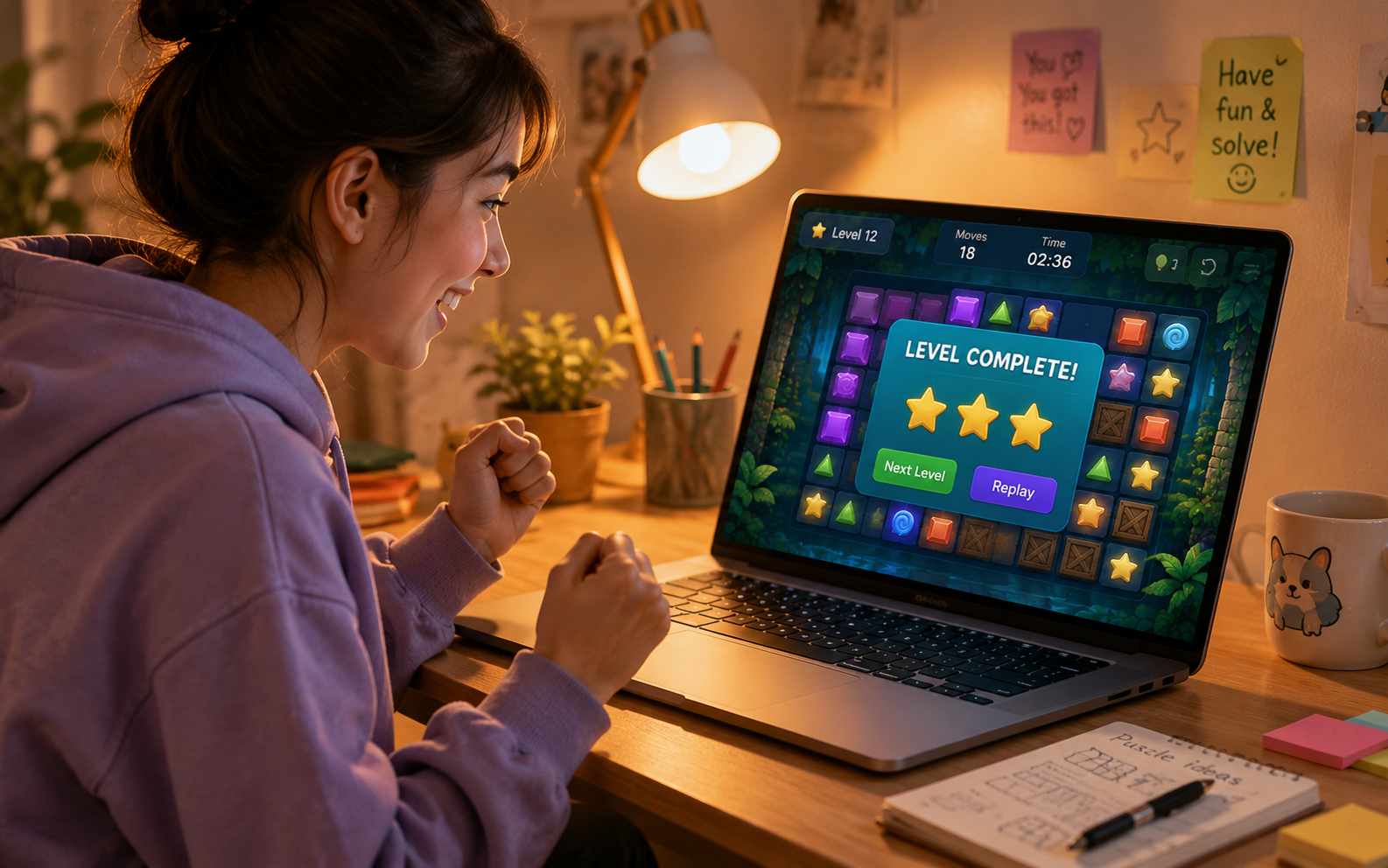
Turn a favorite type of brain teaser into something friends can play, even if you have never used a game engine. Start with one rule and learn by solving the version you generate.
Indie Designers and Prototypers
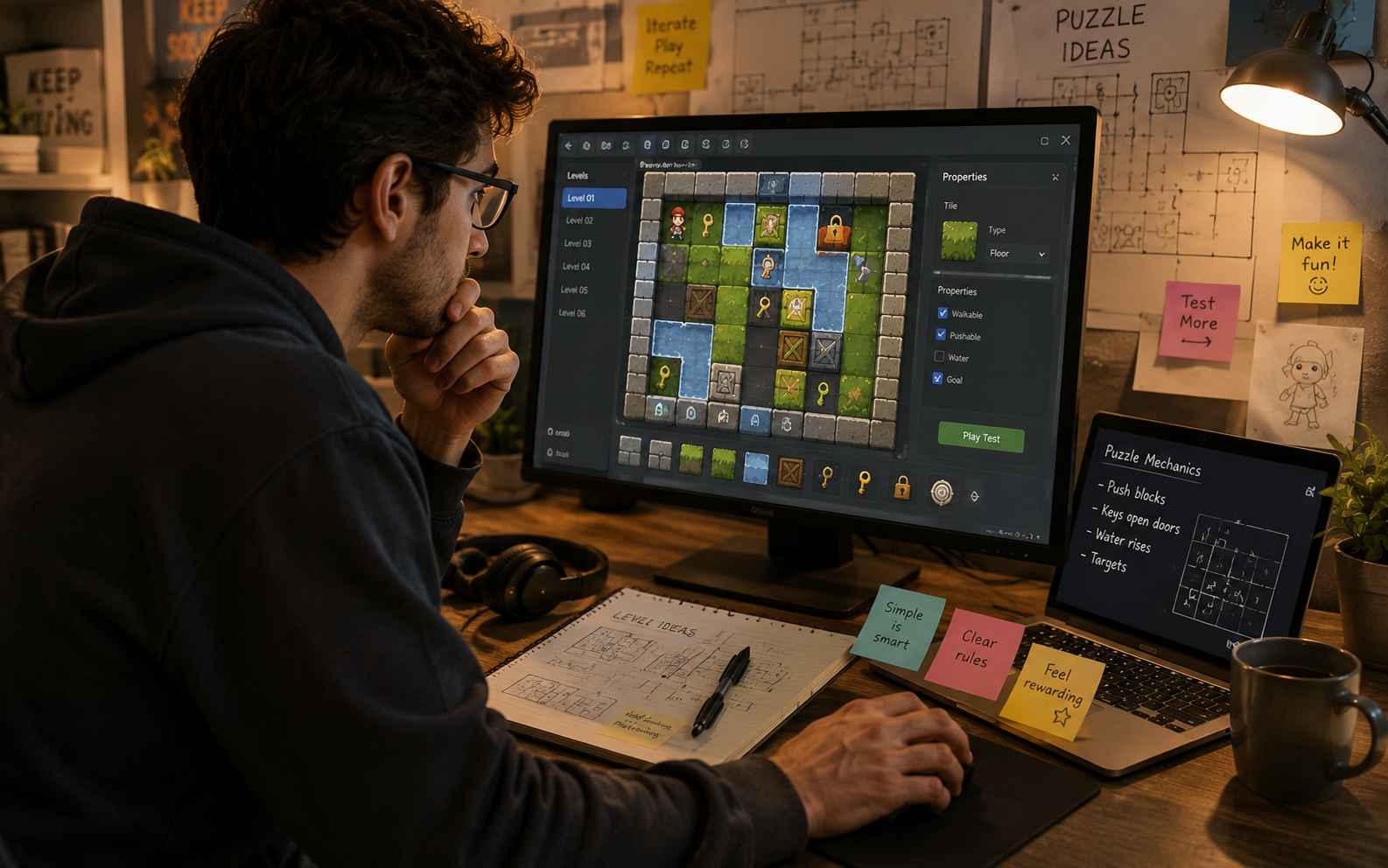
Prototype a puzzle mechanic before investing in a full art pipeline or level set. A playable browser build makes it easier to judge clarity, depth, replay value, and where players may become stuck.
Teachers, Students, and Community Creators
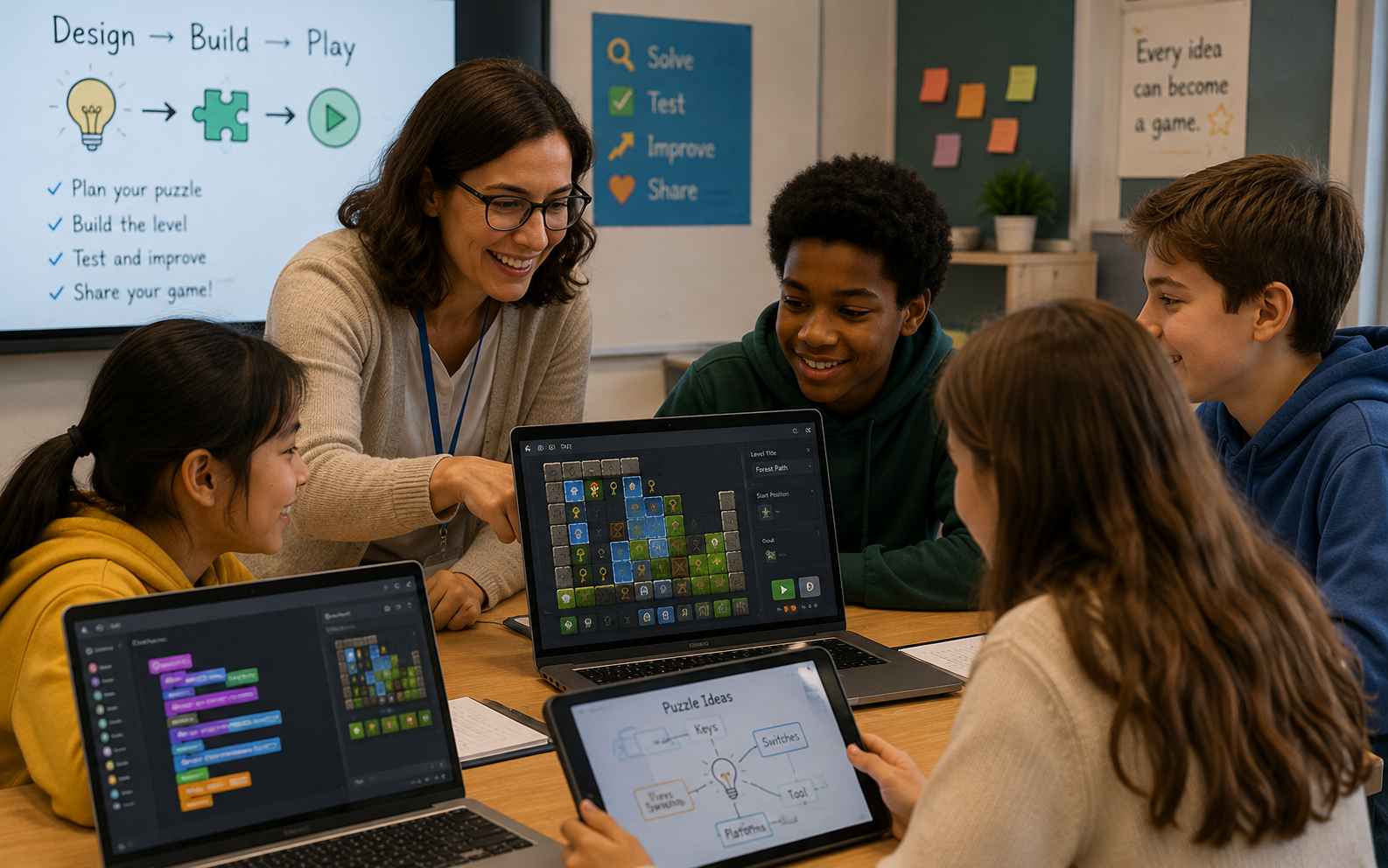
Create vocabulary games, classification challenges, logic activities, or themed community puzzles. Share the game through a browser page so players can try it without installing specialist software.
Related Puzzle Makers and Creation Guides
Explore focused makers for word, matching, platform, and 2D games, then use the guides to plan fair rules, write a precise prompt, test the solution, and improve the player experience.
View More
Puzzle Game Maker FAQs
A puzzle game maker is a tool for creating interactive challenges built around rules, clues, patterns, spatial reasoning, words, numbers, or problem solving. SoonLab uses natural-language prompts to generate a playable browser version that you can test and refine.
Create Your Own Puzzle Game
Begin with one mechanic, one clear solved state, and a small level you can complete yourself. Generate the game, test every rule, refine the hints and difficulty, then publish, share, or download your puzzle.
Create a Puzzle Game