
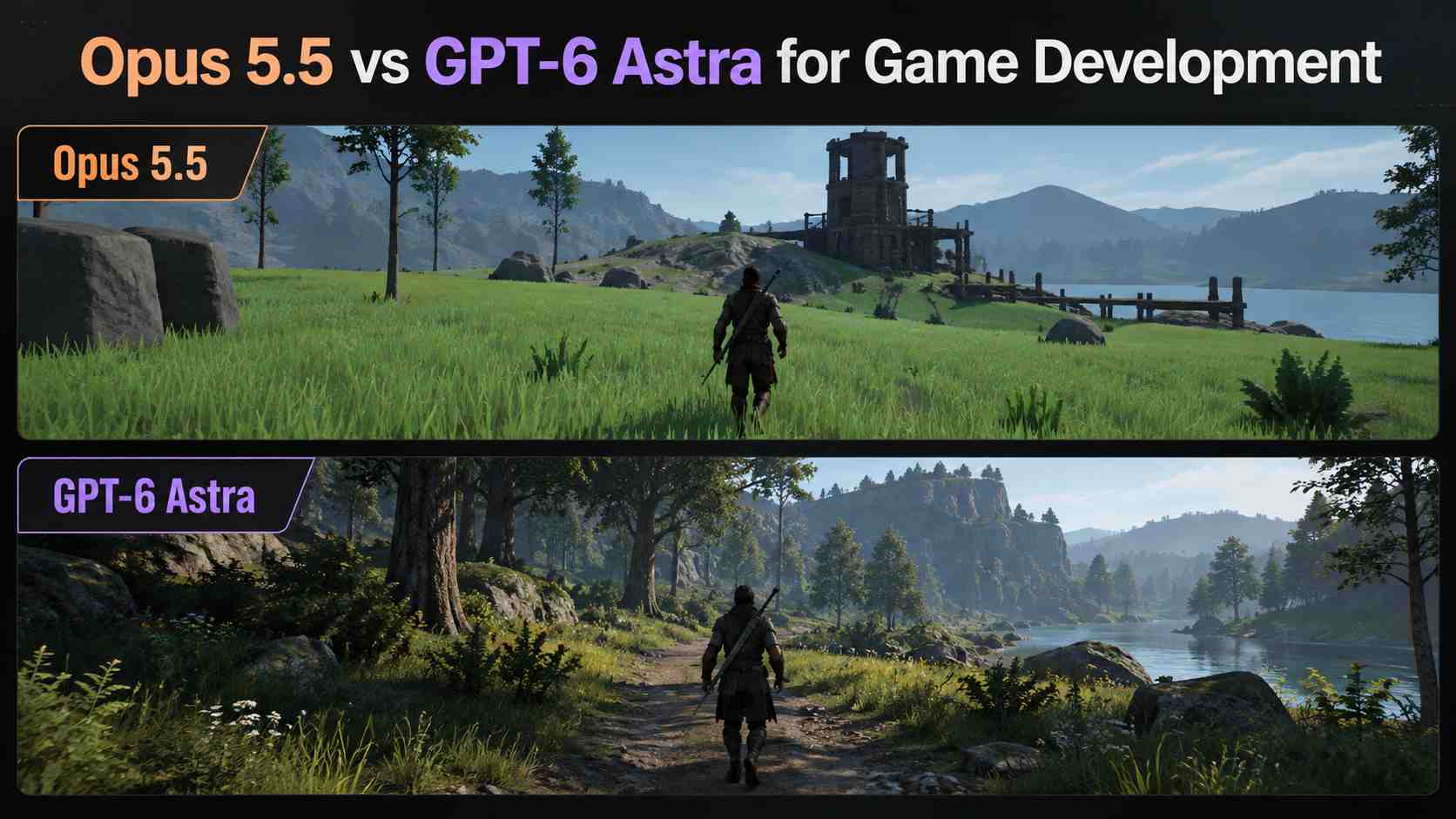
Choosing between Claude Opus 5.5 and GPT-6 Astra for game development? This guide compares how they build playable prototypes, handle 2D and 3D projects, respond to revisions, and use time and budget. You’ll also see where each model fits—from making a first browser game to improving an existing project—and how to test them on your own workflow.
In the published game-building tests reviewed here, Opus 5.5 produced the more elaborate first drafts, while Astra finished faster on one task and cost less on the other. Use those results as a starting point, then match the model to the game you want to make and the tools you plan to use.
Opus 5.5 vs GPT-6 Astra for Game Development: First-Build Results
How Opus 5.5 and GPT-6 Astra Compare on Game Prototypes
When you use AI to make a game, a promising first build should do more than look good. The controls need to respond, the main mechanic should be clear, and the player should have a reason to keep going. These are the things to check when comparing what Claude Opus 5.5 and GPT-6 Astra can build from a prompt.
In one side-by-side game-building test published on September 25, both models received the same prompts for a runner and an island-building game. Opus 5.5 ran in Claude Code; Astra ran in Codex. Each model worked in its own repository, with no follow-up fixes included in the results.
| Game prototype | Claude Opus 5.5 | GPT-6 Astra |
|---|---|---|
| Runner | $15.25 · 62 minutes | $7.09 · 24 minutes |
| Island builder | $5.40 · about 30 minutes | $6.88 · 27 minutes |
For the runner, Opus added more movement options and game features, while Astra finished sooner and cost less. For the island builder, the author preferred Opus’s more connected gameplay systems, but Astra took slightly less time and cost more.
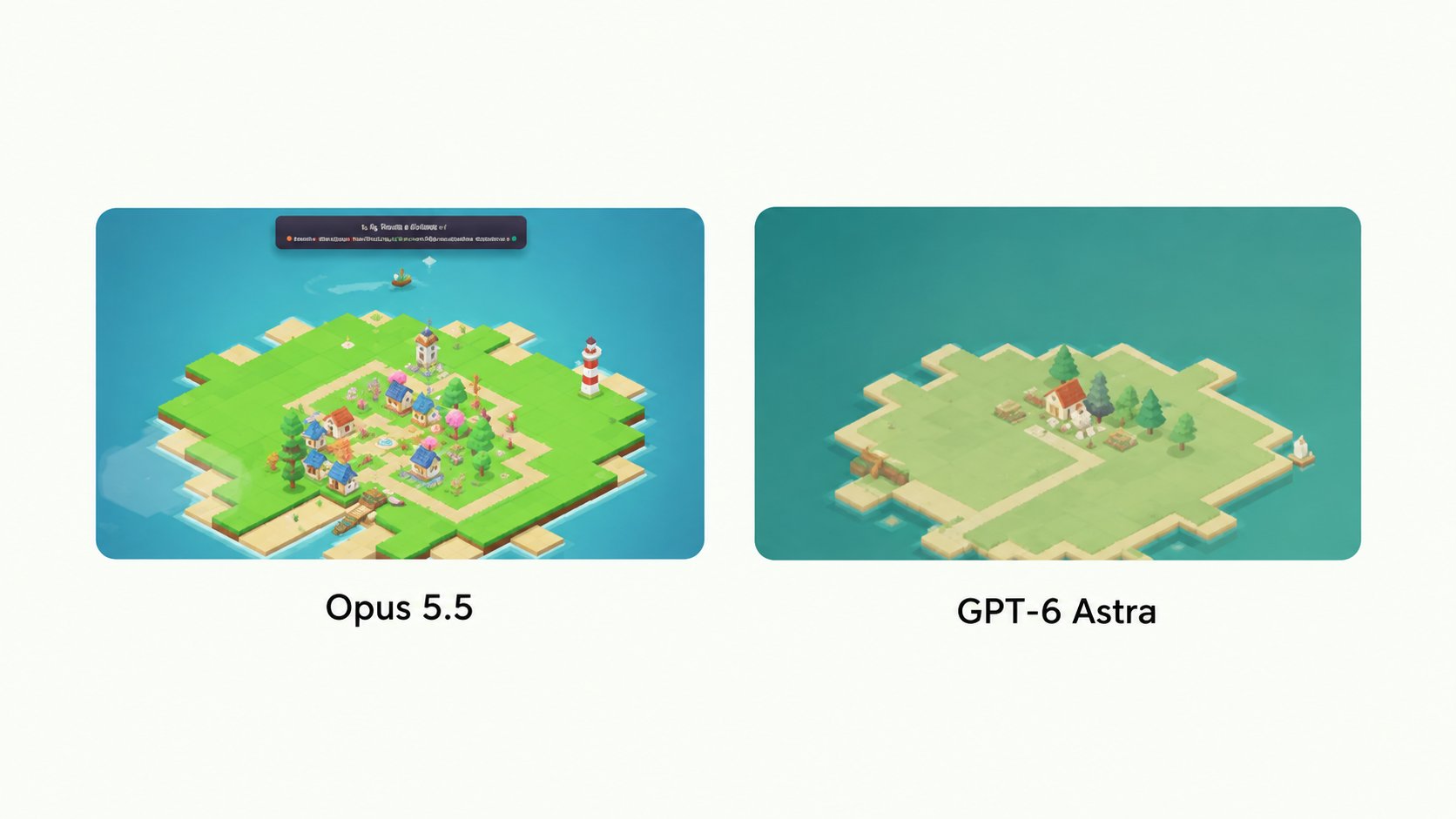
For creators, the useful takeaway is that a richer first draft may save design work but can take longer and cost more. A faster, simpler build may be a better starting point if you already know which features you want to add. The right choice depends on whether you value a more developed first pass or a quicker base to shape yourself.
What to Look for in an AI-Generated Game
Before comparing LLMs in AI Game Development, decide what “done” means for your prototype. For a runner, check that the player can start, move, avoid obstacles, lose, and restart. For an island builder, check that players can place objects and see how their choices affect the game.
Then try the same follow-up request with each model. Ask for one change—such as adding a dash or making object placement affect a score—and check whether the original game loop still works. This shows whether the model can build on its first version, not just produce an appealing demo.
Extra features are useful when they support the game’s main idea. If they make the rules harder to understand or break existing mechanics, a simpler prototype may be the stronger foundation for development.
Opus 5.5 vs GPT-6 Astra for 2D and 3D Game Development
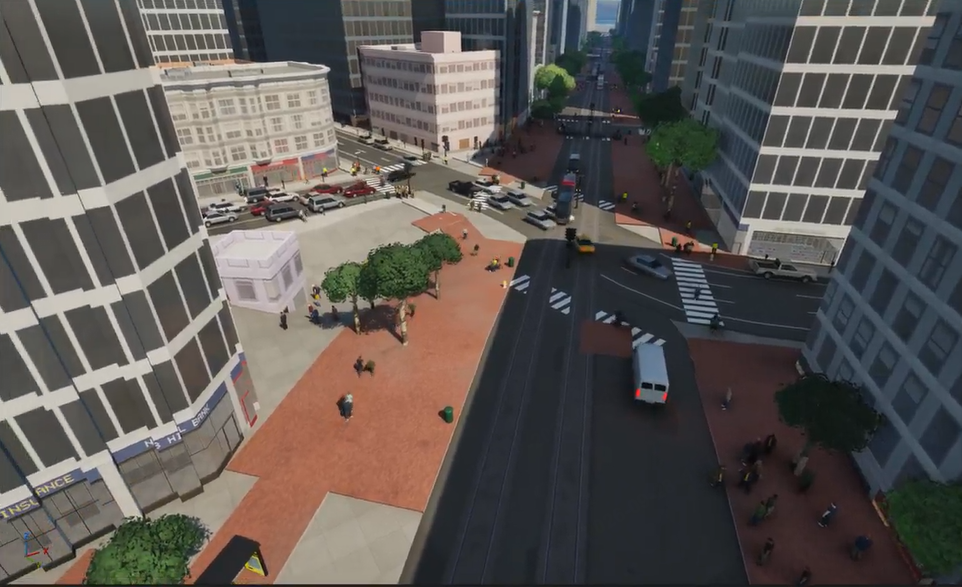
When an AI game maker produces an impressive screenshot, the next question is whether the game holds together once you start playing. For 2D, check movement, collisions, and clear feedback. For 3D, add camera behavior, depth, navigation, and performance. These checks tell you more about a useful prototype than visual polish alone.
Forward Future’s September 22 Opus 5.5 field tests include Unreal Engine experiments, a flight simulator, and playable puzzle projects. The creators used different tools and amounts of iteration and state that the examples are not a controlled benchmark. Their Tidekeeper puzzle was chosen from twelve concepts, then developed further. This shows what a creator achieved with Opus in that workflow; it does not measure first-prompt success or establish an advantage over Astra.
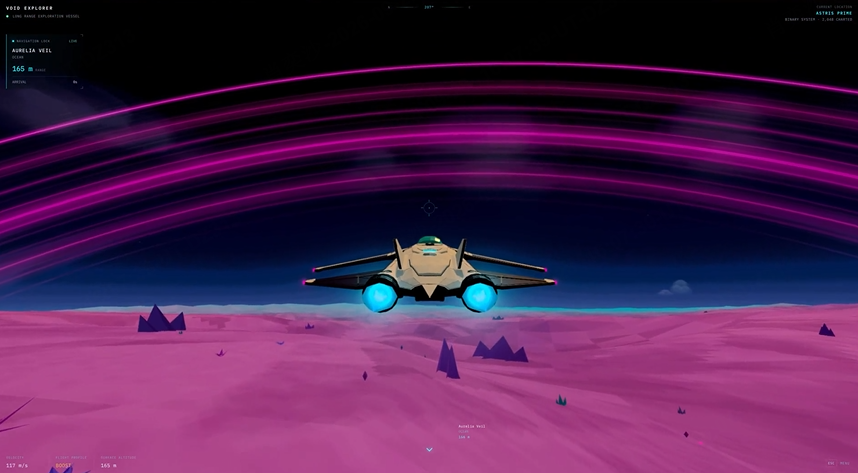
For GPT-6 Astra, Thomas Ricouard’s September 4 account of building Void Explorer describes a procedural space game built in Codex. The project exposes game state, rendering counters, and named test scenes, giving the agent concrete ways to investigate issues. It is an OpenAI developer account, not an independent comparison.
For your own 3D prototype, make one failure easy to reproduce: a camera that clips through a wall, a landing that misses a platform, or a route the player cannot navigate. Give the model a way to inspect the same scene after each change. SoonLab’s GPT-6 Astra 3D game development guide shows how this kind of iteration can apply to a browser-game workflow.
Opus 5.5 vs GPT-6 Astra for Game Debugging and Iteration
A prototype can work at first and still break when you change it. A dash might bypass a locked door, faster movement might make a jump impossible, or a restart might leave an enemy timer running. These interactions are where a game development model needs more than code generation: it needs to understand the existing rules and verify that they still work.
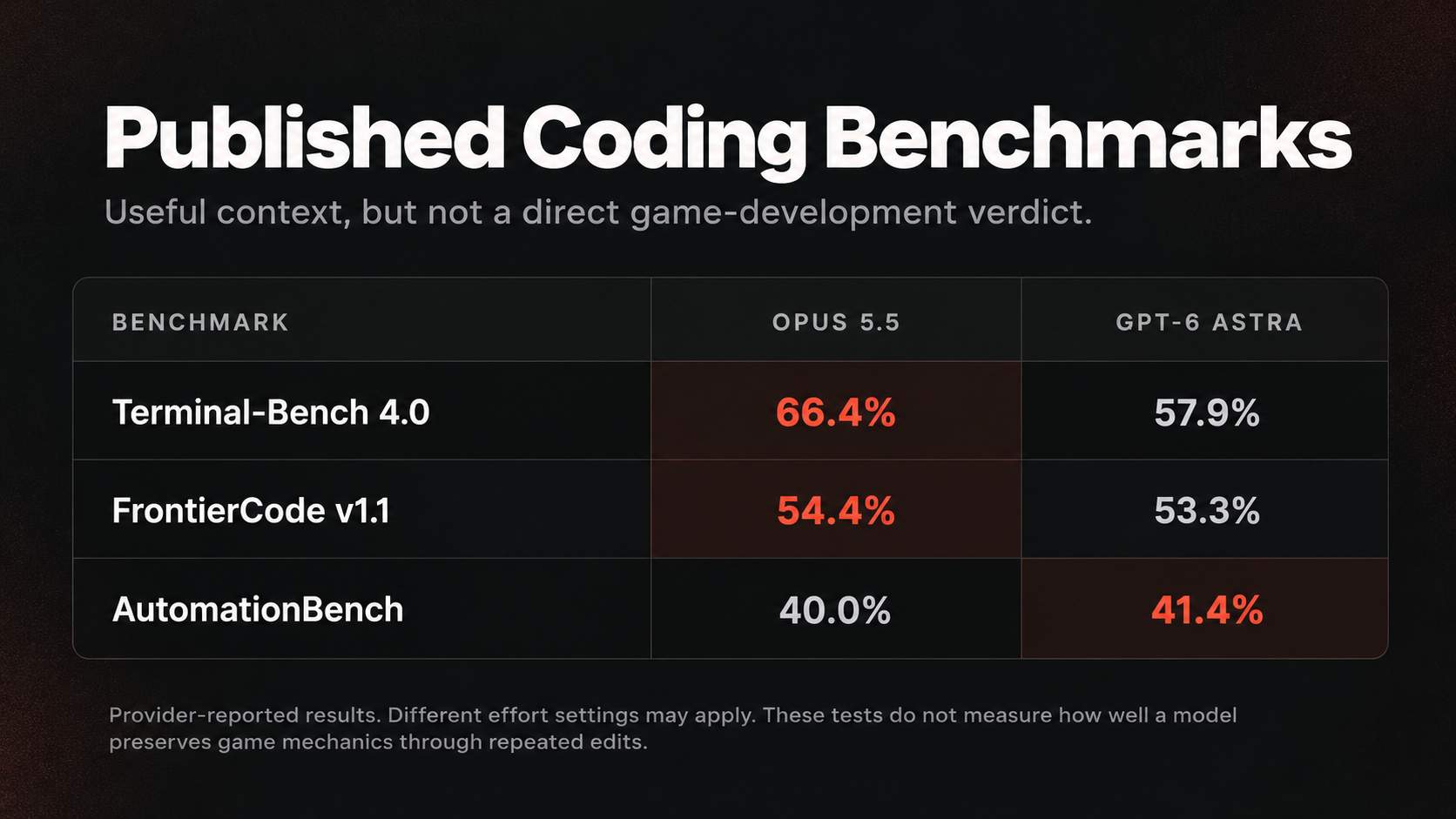
Published coding benchmarks can offer useful context, but they do not answer how well a model preserves game mechanics through repeated edits. Anthropic’s September 22 results use different effort settings and provider-reported scores, so they should not be read as a direct game-development contest between Opus 5.5 and Astra.
Astra does have an early game-development case to consider. In its September 3 Playco case study, OpenAI reports that Playco built three themed prototypes from one foundation and saw 50% fewer manual fixes than with its previous model. Playco’s Playbot connects to Unity and Godot so models can edit scenes and test games. This is a result reported by Astra’s provider and customer; it does not compare Astra with Opus 5.5.
If you already have a project, test both models on the same reproducible bug and one small feature request. Ask each to preserve unrelated behavior, run the game, and say which checks it completed. Then replay the original mechanics yourself. That will show whether the model fits your project better than a general coding score can. SoonLab’s GPT-6 game development review offers more detail on building and testing with Astra.
Opus 5.5 vs GPT-6 Astra: Game Development Cost and Speed
API token rates make a useful starting point. Anthropic’s September 22 announcement lists Opus 5.5 at $4 per million input tokens and $20 per million output tokens. OpenAI’s model catalog lists Astra at $10 and $50. Tokens measure the text and other content processed by the model; these rates do not include every service charge or caching discount.
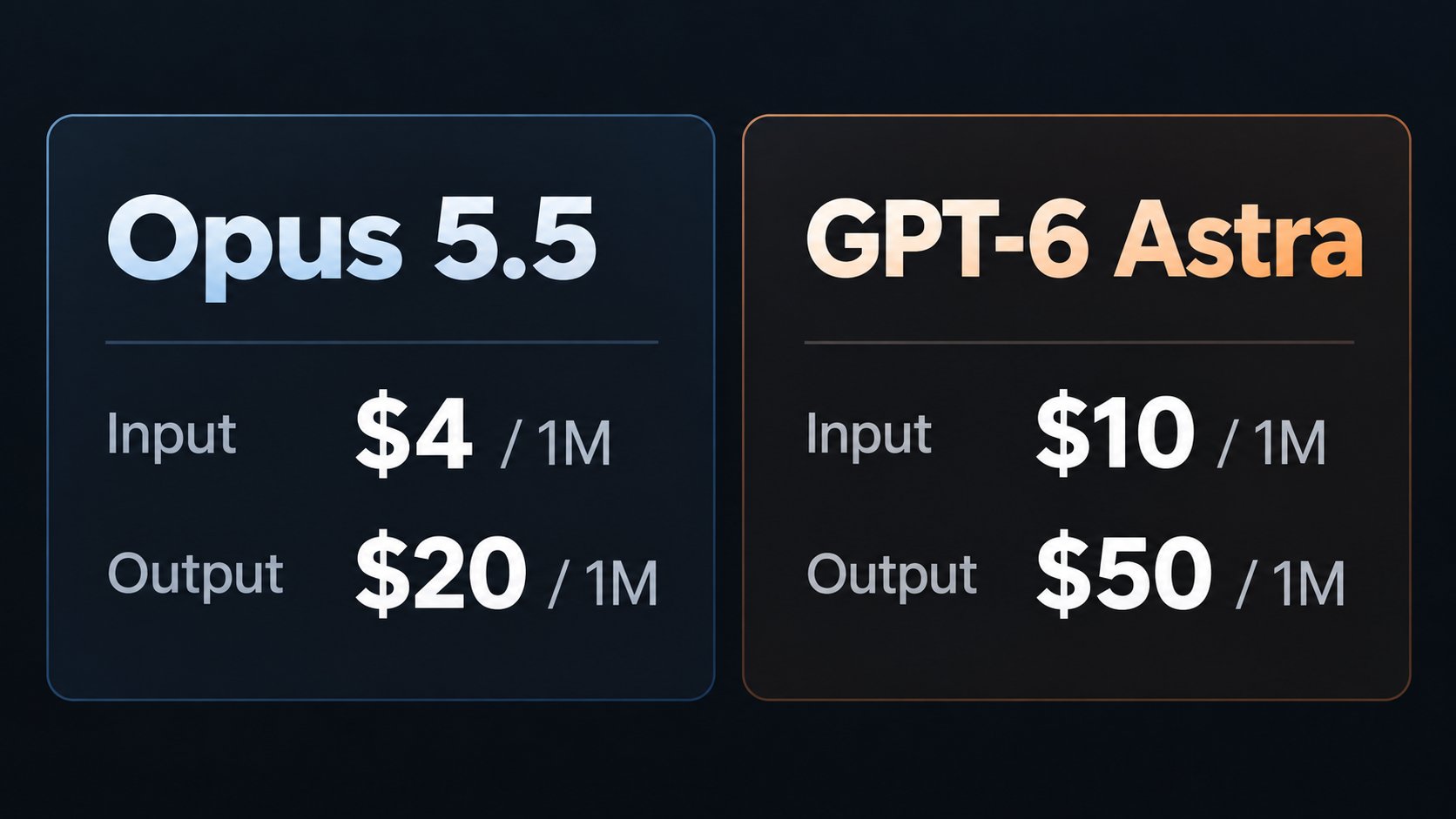
But lower cost per token does not automatically mean lower cost per game. In the two-game comparison above, Opus cost more on the runner, while Astra cost more on the island builder. The difference came down to how much work each model did for each task. Count the full build, including retries, revisions, tools, and human review.
Use the same rule for speed: measure how long it takes to pass your gameplay checks, not just how quickly a model produces its first version. A quick build that needs extensive repair may take longer overall.
How to Choose Between Opus 5.5 and GPT-6 Astra for Game Development
For No-Code Browser Game Creation
Choose a workflow that lets you play the result and request changes without first setting up an engine project. SoonLab offers GPT-6 Astra to VIP users through its GPT-6 Astra game maker, a prompt-to-play option for 2D and 3D browser games.
The game preview, editing, and sharing experience comes from SoonLab’s product integration; an Astra API call by itself does not include that workflow. Check SoonLab’s points and account access separately from the models’ API prices.
Community posts can suggest approachable project ideas, but treat them as individual experiences. In a September 28 r/aigamedev post, one creator described making a local party game with Opus 5.5 and phones as controllers. It is a single report, not a verified success rate or a comparison with Astra.
For AI-Assisted Development in an Existing Game Engine
Try Opus 5.5 if your first priority is exploring a more developed game concept from a prompt. Try Astra if your workflow can expose game state and repeatable tests to the model. The published examples make these sensible starting points, but they do not prove that either model is always better at one kind of project.
For multiplayer, save systems, console requirements, or sustained performance, run a small test in your actual project before choosing. The evidence available here does not settle those cases.
Build Your First GPT-6 Astra Game with SoonLab
If this comparison has given you a game idea, I’d start with a small version you can actually play. SoonLab brings GPT-6 Astra into a browser-based creation workflow, so you can describe your idea, try the result, and refine it through conversation without setting up a game engine.
Turn your idea into aplayable game
Describe the game you want to make, and SoonLab will help you start building it.
Start with one clear experience: a platformer with a satisfying jump, a survival arena with short enemy waves, or a 3D delivery game with a timer. Describe the controls, visual style, challenge, and player goal. Once the first version is ready, play it and ask for specific changes, such as a smoother camera, clearer enemy attacks, or a more forgiving opening level.
That is where I see SoonLab’s appeal for new creators: you can make decisions while playing your own game. You might discover that a shorter level feels better, that the character needs a faster turn, or that one extra obstacle makes the challenge more interesting. Each playthrough gives you something concrete to improve.
GPT-6 Astra is available on SoonLab. Explore the examples in the GPT-6 Astra game maker, then build a focused 2D or 3D browser game of your own.
FAQs About Opus 5.5 and GPT-6 Astra for Game Development
Can Opus 5.5 or GPT-6 Astra make a complete game from one prompt?
Both have published examples of playable games generated from a single prompt. For a small game, that can provide a useful first version. Before calling it complete, check the controls, objectives, difficulty, win and loss states, and restart behavior. Larger projects will usually need more iteration, testing, and design decisions.
Can I make an AI game without knowing how to code?
You can start with a tool that handles generation and gives you a playable preview. SoonLab lets you describe a browser game and request changes in natural language. Coding knowledge becomes more useful when you want to investigate persistent bugs, build custom systems, or work directly in an engine such as Unity or Godot.
Which model is better for 3D game development?
Both have promising 3D examples, but the available tests do not establish a consistent winner. For your project, compare camera movement, collisions, controls, and frame rate alongside the visuals. A model’s access to the running game and testing tools also affects how well it can find and fix problems.
Why can an AI-generated game look impressive but feel bad to play?
Visual quality and game feel need different checks. A racing game can look polished while steering feels slow or collisions behave unpredictably. Play the same short section several times and identify one problem at a time. Feedback such as “reduce the delay between steering input and turning” gives the model a clearer task than “make the driving better.”
Is Opus 5.5 cheaper than GPT-6 Astra for making games?
Opus 5.5 has lower standard API token rates at the prices covered in this article. However, the final cost depends on how much the model generates, how long it works, and how many revisions you need. Compare the cost of reaching a playable result. Subscription limits and SoonLab points follow their own pricing rules.
Do I need Unity or Godot to use GPT-6 Astra for game creation?
No. You can create a browser game through SoonLab without setting up either engine. Unity or Godot becomes relevant when you want direct control over an engine project, custom systems, assets, or platform-specific builds. Choose the workflow that matches what you want to make and maintain.
Final Verdict
Opus 5.5 is a strong option when you want to explore a more detailed game concept from a prompt. GPT-6 Astra is worth considering when you want to build, playtest, and refine a game through an integrated workflow. For creators who want to try an idea without setting up a game engine, SoonLab’s GPT-6 Astra game maker turns prompts into playable 2D and 3D browser games.
Choose the workflow that helps you get your core game loop working, make useful changes, and keep creating. Start with one idea, play the first version, and shape it into a game you’re excited to share.