

If you want more games like Slay the Spire, start with Monster Train 2 for explosive deck synergies, Cobalt Core for readable tactical combat, or Vault of the Void for deeper control and less randomness. Choose Across the Obelisk if you want co-op, Balatro for short combo-driven runs, and Wildfrost for a strong mobile or Switch option.
"Like Slay the Spire" can mean several things. Some players want mid-run deckbuilding and relic combinations. Others care more about visible enemy intentions, route planning, or turning a weak deck into a winning engine.
This guide separates those needs. Every recommendation explains what feels familiar, what changes, and who is most likely to enjoy it.
How We Chose These Slay the Spire Alternatives
We compared each game against five parts of the Slay the Spire formula:
- Building or changing a deck during each run
- Turn-based decisions with understandable consequences
- Routes, encounters, or rewards that force tradeoffs
- Builds that become stronger through card, relic, unit, or item synergies
- Enough variation and difficulty to support repeated runs
We checked official game and platform information, recurring recommendations in recent r/slaythespire discussions, and broader roguelite threads.
10 Best Games Like Slay the Spire in 2026
| Game | Best For | Main Difference | Platforms |
|---|---|---|---|
| Monster Train 2 | Big synergies and powerful builds | Multi-floor defense and more explosive scaling | PC, PS5, Xbox Series X/S, Switch |
| Cobalt Core | Clear tactical decisions | Ship positioning on a single axis | PC, macOS, Switch |
| Vault of the Void | Low-RNG strategy | More control over deck changes and encounters | PC, Switch, iOS, Android |
| Wildfrost | Positional card combat | Companion placement and countdown timers | PC, Switch, Xbox, iOS, Android |
| Across the Obelisk | Online co-op | Four-character party and longer RPG-style runs | PC, PS5, Xbox Series X/S, Switch |
| Balatro | Fast, high-scoring combos | Poker scoring instead of enemy combat | PC, Mac, consoles, iOS, Android |
| Inscryption | Story and atmosphere | Horror, puzzles, and narrative surprises | PC, Mac, Linux, PlayStation, Xbox, Switch |
| Shogun Showdown | Compact tactical battles | Attack tiles, movement, and timing replace cards | PC, Mac, Linux, PlayStation, Xbox, Switch |
| Astrea: Six-Sided Oracles | Complex risk management | Dice-building and corruption mechanics | PC, PlayStation, Xbox, Switch, iOS, Android |
| Griftlands | Story-driven deckbuilding | Separate combat and negotiation decks | PC, Mac, Linux, PS4, Xbox One, Switch |
1. Monster Train 2 — Best Overall Alternative
Best for: Players who want stronger synergies and more dramatic power growth
Not ideal for: Players who prefer the restrained balance of Slay the Spire
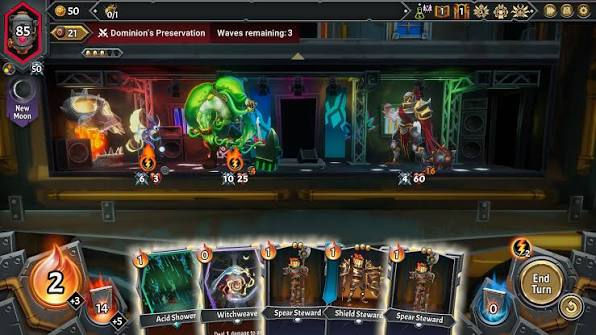
Monster Train 2 is the easiest first recommendation because it keeps the run-based deckbuilding structure while changing the battlefield. Instead of fighting on one screen, you defend three vertical floors and decide where to place units, spend upgrades, and stop enemies before they reach your Pyre.
Its builds usually become more extreme than those in Slay the Spire. Cards, units, equipment, and clan combinations can produce huge damage loops. That feels spectacular, although some players may miss the Spire's tighter, incremental decisions.
2. Cobalt Core — Best for Readable Tactical Combat
Best for: Players who enjoy enemy intentions and solving each turn
Not ideal for: Players seeking the highest difficulty ceiling
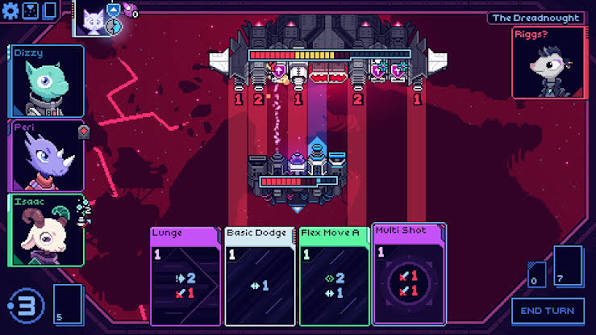
Cobalt Core replaces fantasy heroes with a crew trapped in a sci-fi time loop. Cards still control attacks, shields, and utility, but your ship can also move left or right to dodge missiles, protect damaged sections, or line up its weapons.
Positioning gives every turn a clear tactical problem without making the game hard to read. Crew and ship combinations create cross-character synergies, while a continuing story gives you another reason to repeat runs. It is generally more forgiving than Slay the Spire.
3. Vault of the Void — Best for Low-RNG Strategy
Best for: Experienced players who want more control
Not ideal for: Anyone looking for a simple first deckbuilder
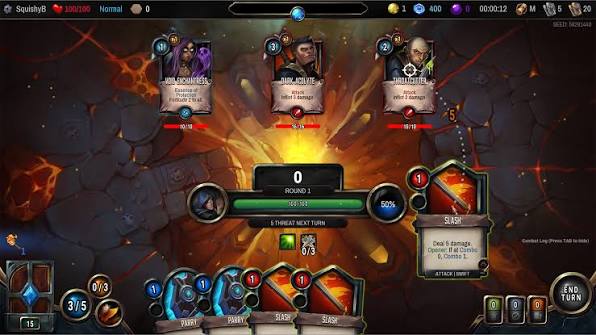
Vault of the Void is one of the closest matches for players who view Slay the Spire as a game of planning rather than luck. You can adjust your deck between battles, preview enemies, and build around information that many roguelikes would hide.
Combat asks you to manage incoming damage carefully instead of treating block as a simple temporary shield. The systems take longer to learn, but the extra control suits players who dislike losing to an unlucky reward sequence.
4. Wildfrost — Best for Positional Combat on Mobile or Switch
Best for: Players who want difficult battles in a portable format
Not ideal for: Players who dislike learning through repeated losses
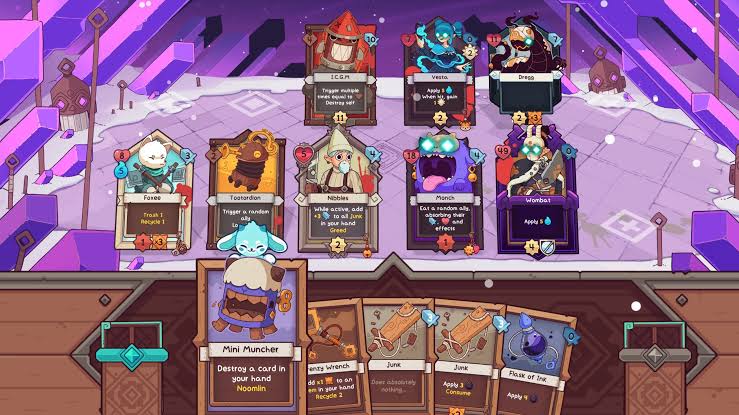
Wildfrost combines deckbuilding with companion placement. Units attack when their countdown reaches zero, so success depends on where you place them, when you move them, and how you manipulate the battle timeline.
The cheerful art makes the game look lighter than it is. Small sequencing mistakes can destroy a promising run. That tension feels familiar, while the board and countdown system give it a distinct identity.
It is also one of the strongest mobile games like Slay the Spire, with versions on iOS and Android in addition to PC, Switch, and Xbox.
5. Across the Obelisk — Best Multiplayer Game Like Slay the Spire

Best for: Friends who want a cooperative deckbuilding campaign
Not ideal for: Players who want short solo runs
Across the Obelisk turns the formula into a party-based RPG. You control four heroes, build a separate deck for each one, and develop combinations across damage, defense, healing, and support roles.
The major advantage is co-op. Up to four players can join a party, and the official version supports cross-platform play across PC, Switch, PlayStation 5, and Xbox Series X/S. Choices about routes, cards, and combat become shared decisions rather than solo calculations.
Players who enjoy its party building, character progression, and campaign structure can also explore our guide to the best RPG games.
Runs are longer and the number of cards can feel overwhelming. If multiplayer matters most, however, this is the strongest direct answer.
6. Balatro — Best for Fast Combo-Driven Runs
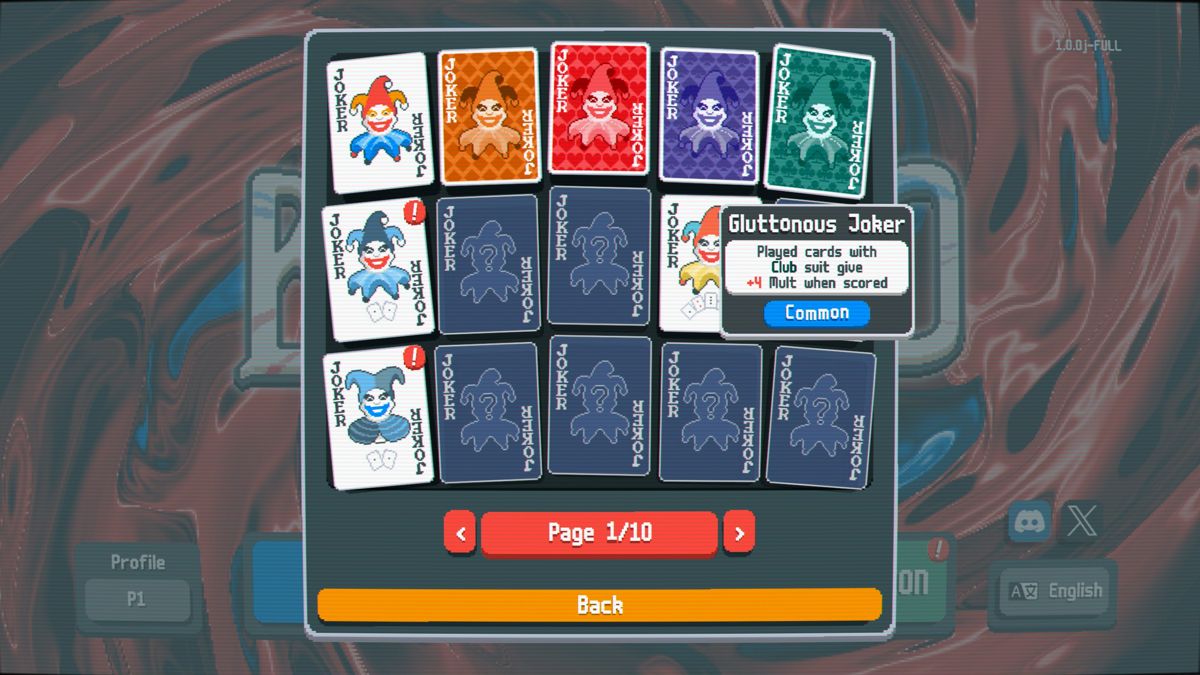
Best for: Players who love engine building and score multiplication
Not ideal for: Players who mainly enjoy enemy patterns and defensive combat
Balatro uses poker hands as its foundation, then lets Jokers, card modifications, and deck upgrades break the normal rules. Like Slay the Spire, it begins with limited tools and asks you to build an engine from uncertain rewards.
The feeling is similar, but the decisions are different. There are no enemies telegraphing attacks and less route-based risk management. The goal is to scale your score fast enough to defeat demanding Blinds. Its PC, console, and mobile support also makes it easy to play anywhere.
7. Inscryption — Best for Story and Psychological Horror
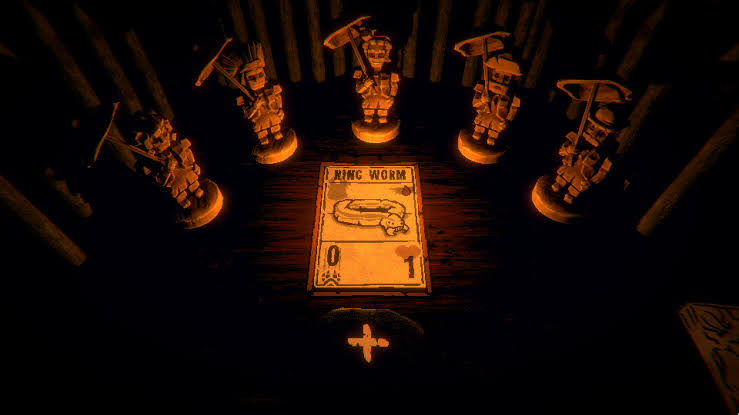
Best for: Players who want mystery, atmosphere, and card experiments
Not ideal for: Players seeking hundreds of similar high-difficulty runs
Inscryption blends deckbuilding with escape-room puzzles and psychological horror. The opening card game uses sacrifices, creature placement, items, and card modification to create tense battles, but the larger experience keeps changing around you.
Its biggest strength is surprise, so play with as little prior knowledge as possible. It is a memorable card-based adventure rather than a replacement for the long-term Ascension climb. A replayable challenge mode becomes available after the main experience.
If its unsettling atmosphere and psychological storytelling appeal to you, explore more of the best indie horror games.
8. Shogun Showdown — Best Non-Card Tactical Alternative
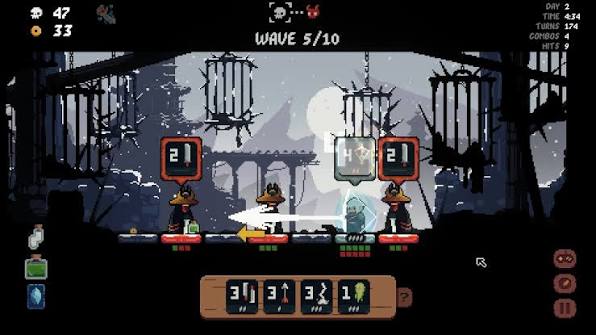
Best for: Players who value prediction, positioning, and clean turns
Not ideal for: Players who specifically want traditional card art and hands
Shogun Showdown uses attack tiles instead of cards, but its decision rhythm feels remarkably close to Slay the Spire. You see what enemies will do, move along a narrow battlefield, prepare attacks, and decide when to release a combo.
Tiles can be upgraded and combined throughout a run, so the pleasure of refining a build remains. Choose it when "a game like Slay the Spire" means a fair tactical puzzle, not necessarily another fantasy card game.
9. Astrea: Six-Sided Oracles — Best Dice-Building Alternative
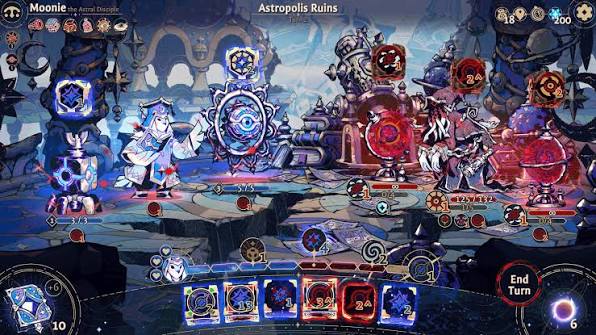
Best for: Players who want complex risk-and-reward decisions
Not ideal for: Players who want predictable card draws
Astrea: Six-Sided Oracles builds a pool of customizable dice instead of a deck of cards. Safe faces offer consistency, while stronger dice introduce outcomes that may help enemies or corrupt your own character.
Its purification and corruption system turns health into an active resource. Taking damage can unlock abilities, making the correct decision less obvious than blocking every attack. It has a steeper learning curve and more volatility than Slay the Spire, but it rewards calculated risk.
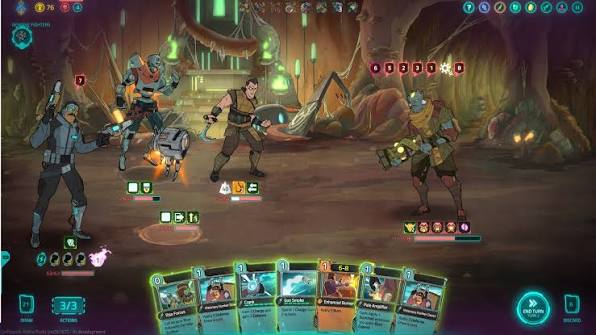
10. Griftlands — Best Story-Driven Deckbuilder
Best for: Players who want characters, choices, and narrative consequences
Not ideal for: Players who prefer short, purely mechanical runs
Griftlands gives each character two decks: one for combat and another for negotiation. Conversations become card battles built around arguments, hostility, and social leverage, while relationships created during the story can help or hurt later encounters.
Each run feels more like a role-playing campaign than a climb through combat rooms. The writing gives choices more context, but runs are longer and less immediately repeatable.
 Expert Tip
Other strong options include Roguebook for two-hero fantasy combat, Dicey Dungeons for shorter runs, Slice & Dice for mobile tactics, StarVaders for grid combat, and the historically important Dream Quest.
Which Game Should You Play First?
Choose based on the part of Slay the Spire you want to keep:
- Closest overall progression: Monster Train 2
- Closest turn-by-turn clarity: Cobalt Core
- More control and less randomness: Vault of the Void
- Best for co-op: Across the Obelisk
- Best for mobile: Balatro or Wildfrost
- Best for story: Inscryption or Griftlands
- Best without traditional cards: Shogun Showdown
- Best for complex risk management: Astrea: Six-Sided Oracles
No alternative reproduces every part of Slay the Spire. The best next game is the one that changes a system you are ready to change while preserving the decision loop you still enjoy.
If route planning and repeated runs matter more to you than card combat, explore the best dungeon crawler games for alternatives built around exploration, loot, party management, and real-time or turn-based combat.
Want to Design Your Own Roguelike Card Game?
Playing several deckbuilders makes their differences easier to see. One may focus on visible enemy intentions, another on positional units, and another on multiplying a score until the rules nearly break.
If you have your own idea, SoonLab AI game maker can help you turn a plain-language prompt into a playable browser prototype. Start with one character, a small card pool, three enemy types, and one clear resource system. Test the central combat loop before adding a large map, dozens of relics, or permanent progression.
Turn your idea into aplayable game
Describe the game you want to make, and SoonLab will help you start building it.
FAQs
What game is most similar to Slay the Spire?
Monster Train 2 is the best overall alternative for run-based deckbuilding and synergies. Cobalt Core is closer if you care most about readable enemy actions and tactical turns, while Vault of the Void is better for players who want more control and less randomness.
Is Balatro similar to Slay the Spire?
Yes, but mainly in its roguelike engine building. Both games ask you to turn uncertain rewards into a strong run. Balatro focuses on poker scoring and Joker combinations rather than enemy intentions, defensive cards, and branching combat routes.
What are the best mobile games like Slay the Spire?
The strongest mobile choices are Balatro, Wildfrost, Astrea: Six-Sided Oracles, and Vault of the Void. Slice & Dice is also worth considering if you are comfortable replacing cards with dice.
Are there multiplayer games like Slay the Spire?
Across the Obelisk is the clearest choice. It supports a party of up to four players and cross-platform multiplayer. HELLCARD is another co-op deckbuilder to consider if combat with friends is your main requirement.
Are there board games like Slay the Spire?
Yes. Slay the Spire: The Board Game adapts the video game into a cooperative tabletop deckbuilder. Players interested in physical alternatives can also look at Aeon's End, Clank!, and Mage Knight, although each emphasizes a different part of the experience.
Conclusion
The best games like Slay the Spire keep the excitement of building a stronger deck, reading the next threat, and deciding whether a risky choice is worth it. What changes is the way each game creates that tension.
Choose Monster Train 2 for powerful synergies, Vault of the Void for greater strategic control, or Across the Obelisk for cooperative play. Balatro is ideal for fast score-building combos, while Inscryption offers a more atmospheric and story-driven experience. There is no perfect replacement—the right choice depends on which part of Slay the Spire you enjoy most.
If these games inspire you to explore your own deckbuilding or roguelike idea, you can use the SoonLab AI game maker to turn a simple prompt into a playable browser prototype. Start with one clear battle loop, such as drawing cards, spending energy, reading enemy intentions, and choosing rewards after each fight. Keep the first version small, test whether the central mechanic feels satisfying, and improve it one step at a time.