
What I want from an anime fighting game is more than a familiar face and a dramatic special attack. The first few battles may win me over with spectacle, but I stay for the feeling that I am learning a character, reading another player, or recreating a fight I genuinely care about.
That is why Guilty Gear Strive is my strongest overall recommendation for competitive 2D combat. I would start with Granblue Fantasy Versus: Rising if difficult inputs usually push you away from fighting games. When I want the scale and freedom of an anime battle rather than strict competitive balance, Dragon Ball: Sparking! Zero is the clearer choice.
The right game depends on what you want to feel when the match begins: the tension of a close one-on-one fight, the controlled chaos of a three-character team, or the simple excitement of seeing a favorite hero transform and fill the arena with energy. Once you know which of those matters most, choosing between these anime fighting games becomes much easier.
| What you want | Best choice | Main limitation |
|---|---|---|
| Competitive anime-style combat | Guilty Gear Strive | Several characters are sold as DLC |
| An easy place to start | Granblue Fantasy Versus: Rising | The free edition has limited content |
| Competitive Dragon Ball battles | Dragon Ball FighterZ | Three-character teams take time to learn |
| Anime spectacle and a huge roster | Dragon Ball: Sparking! Zero | Balance is not its main focus |
| Naruto characters and arena battles | Naruto x Boruto: Ultimate Ninja Storm Connections | Combat can become repetitive |
| Fast air movement | Melty Blood: Type Lumina | Online activity can depend on region |
| Technical character mastery | Under Night In-Birth II Sys:Celes | Its systems take time to understand |
Which Anime Fighting Style Fits You: 2D or Arena?
I separate anime fighting games into two broad groups because they ask for different skills and create different kinds of excitement.
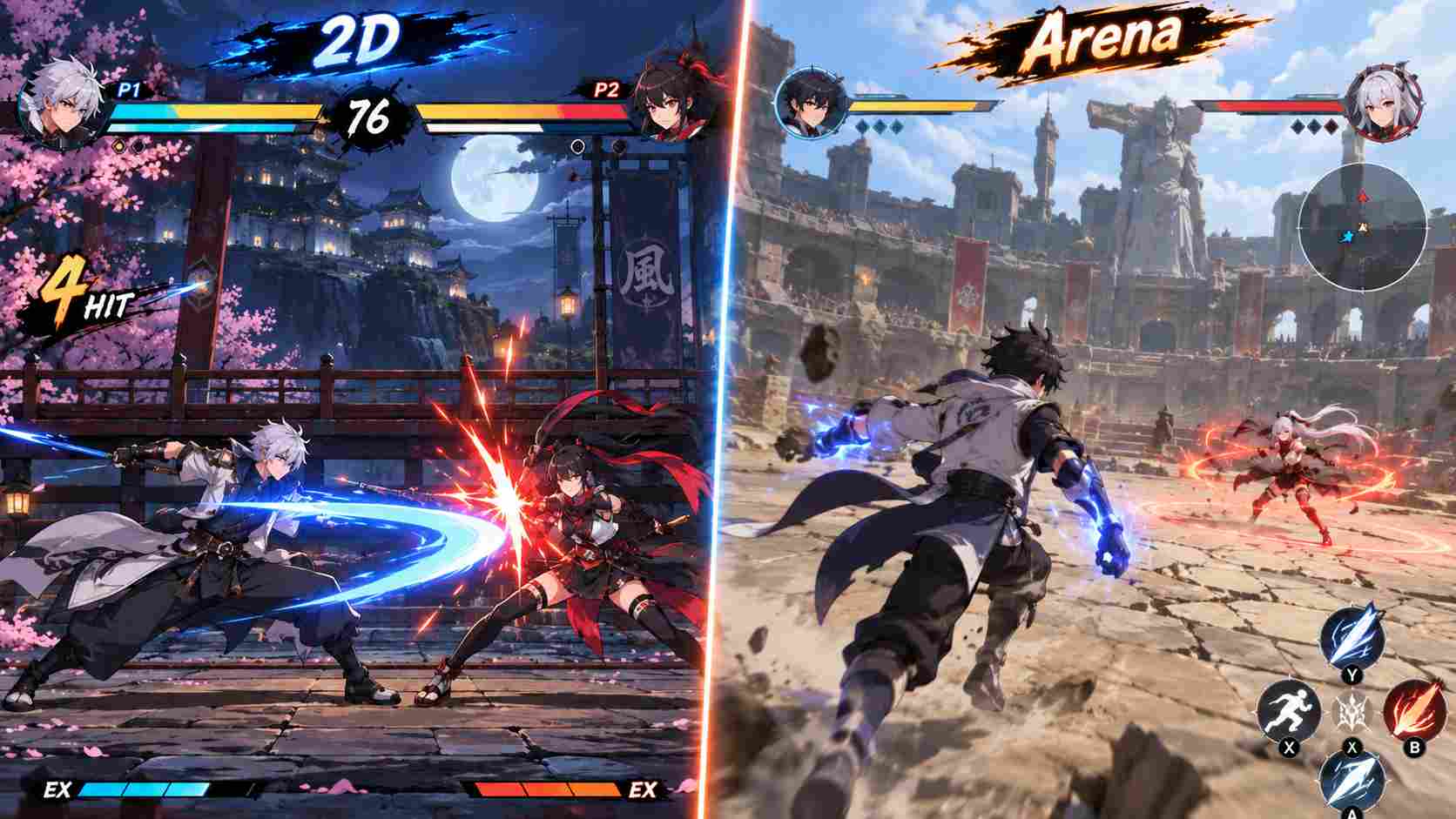
Traditional 2D fighters keep both characters on one plane. Positioning, blocking, pressure, combos, throws, and resource management drive each match. Guilty Gear Strive, Granblue Fantasy Versus: Rising, Dragon Ball FighterZ, Melty Blood: Type Lumina, and Under Night In-Birth II belong to this group.
These games are the better choice if you want to improve over time, learn matchups, play ranked matches, or join the wider fighting game community. Our guide to the best 2D fighting games compares this format with other traditional fighters in more detail.
Arena fighters let you move around a larger 3D space. They usually place more attention on large character rosters, movement across the arena, cinematic special attacks, transformations, and recreating battles from an existing series. Dragon Ball: Sparking! Zero and the Naruto Storm games are clear examples.
I do not see arena fighters as inferior versions of 2D fighters. I choose them for different reasons. Sometimes I want the discipline of learning spacing, defense, and one difficult matchup. At other times, I want to pick a favorite character, transform in the middle of a fight, and watch the arena disappear under a huge attack. Knowing which feeling you want matters more than arguing about which format is more serious.
The Best Anime Fighting Games by Play Style
1. Guilty Gear Strive - Best Overall for Competitive Anime Combat
Best for: Players who want a modern competitive fighter with distinctive characters
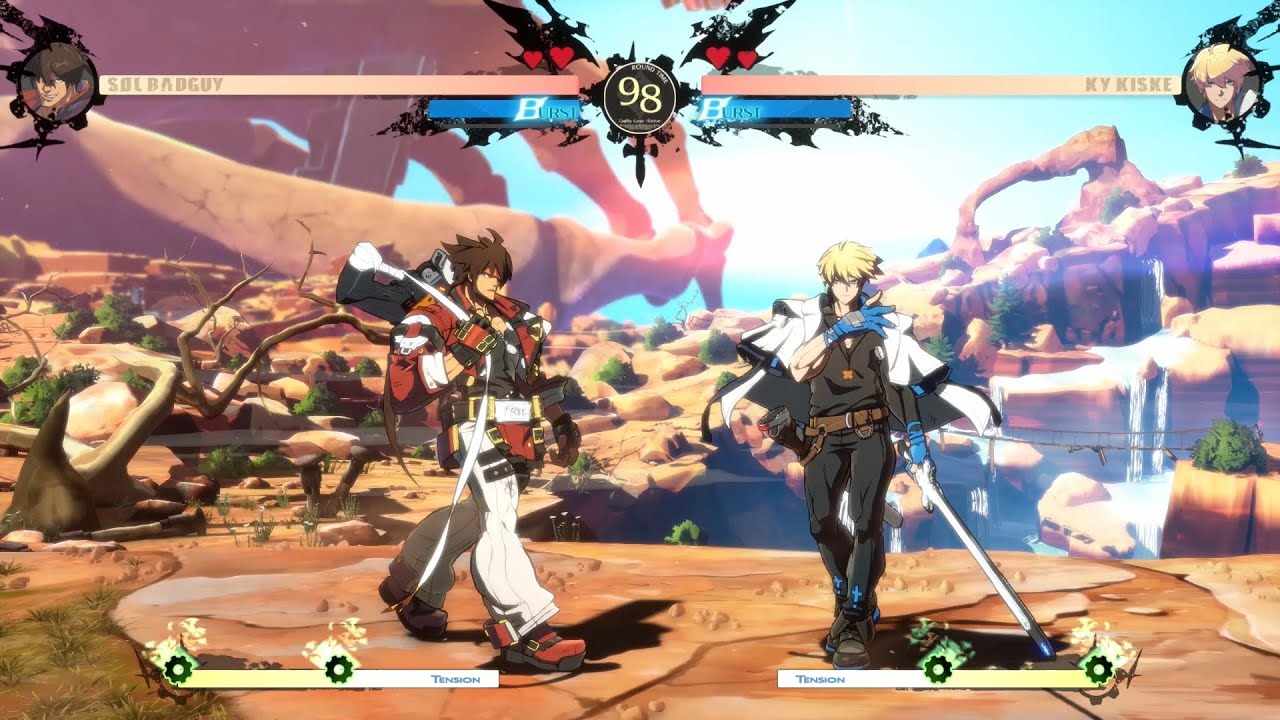
Guilty Gear Strive is my best overall recommendation because its personality does not disappear once the opening animation ends. Heavy attacks feel decisive, movement feels expressive, and each character asks me to think about the match in a different way.
That difference between characters is what makes the roster memorable to me. A rushdown fighter creates the thrill of never letting the opponent breathe. A zoner makes every step across the screen feel earned. A grappler can turn one patient read into the most satisfying moment of the round. I am not simply choosing the design I like most; I am choosing the kind of tension I want to manage.
The Roman Cancel system is another reason I recommend Strive for long-term play. It can extend a combo, rescue a risky attack, stop momentum, or open a new movement route. I like systems that give me room to solve a familiar situation in a new way, and Roman Cancels keep creating those small moments of discovery.
The official Guilty Gear Strive site outlines its characters, modes, and current updates. Its rollback-based online play also makes it a more practical choice for regular online matches than older anime combat games built around delay-based connections.
My verdict: Choose Guilty Gear Strive if you want an anime fighter that feels exciting immediately but still gives you a clear reason to improve. The full character selection is spread across several DLC seasons, so I would compare editions before buying for one specific fighter.
2. Granblue Fantasy Versus: Rising - Best for Beginners
Best for: New fighting-game players who want simple controls without losing strategic depth
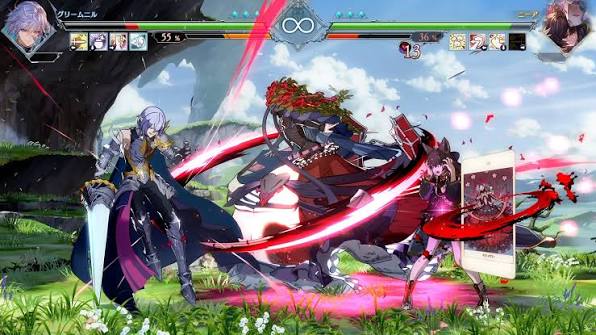
Granblue Fantasy Versus: Rising is the game I would place in front of someone who likes the idea of fighting games but hates feeling helpless during the first hour. Its simple inputs let you use important attacks consistently, so your early attention can go to timing, range, defense, and the person on the other side of the screen.
That creates a more encouraging kind of first match. Instead of fighting the controller, you can make a choice and see why it worked or failed. The pace is also easier to read than the constant air movement of Melty Blood or the busy three-character exchanges in Dragon Ball FighterZ. I still have to think, but I have enough space to understand what happened.
It is also one of the easiest recommendations to try before making a larger commitment. The official Granblue Fantasy Versus: Rising site confirms that a Free Edition is available, although its characters and features are more limited than the full game.
My verdict: Start here if you want your first victories to come from better decisions rather than difficult commands. The free version is useful for testing that feeling, although it does not include the complete roster and modes.
3. Dragon Ball FighterZ - Best for Competitive Tag Battles
Best for: Dragon Ball fans who want a traditional fighting game rather than a 3D arena brawler
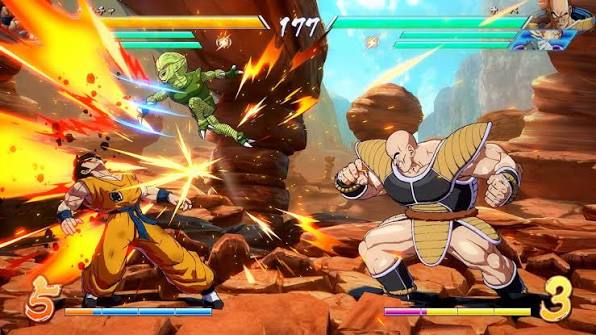
Dragon Ball FighterZ gives me something I rarely get from a licensed anime game: the fantasy of Dragon Ball and the pressure of a serious tag fighter at the same time. Switching characters, calling an assist at the right moment, and protecting an injured teammate make the whole team feel like one strategy rather than three separate picks.
Auto-combos and the Super Dash make the first battles lively even when you know very little. What keeps the game interesting is everything beneath that first layer. Team order changes how I manage meter and damaged characters. Assists can cover an approach, extend pressure, or rescue an idea that would fail on its own. A team gradually begins to feel personal because its rhythm comes from choices I made.
I also think FighterZ understands that anime authenticity is about movement and timing, not only roster size. The sudden camera changes, dramatic finishes, rapid exchanges, and enormous attacks capture Dragon Ball without giving up a structured competitive match.
My verdict: Choose FighterZ when you want Dragon Ball spectacle but still care about team strategy and competitive depth. I would not start here if learning three characters at once sounds more tiring than exciting.
4. Dragon Ball: Sparking! Zero - Best for Anime Battle Spectacle
Best for: Fans who want transformations, flying battles, large arenas, and a broad Dragon Ball roster
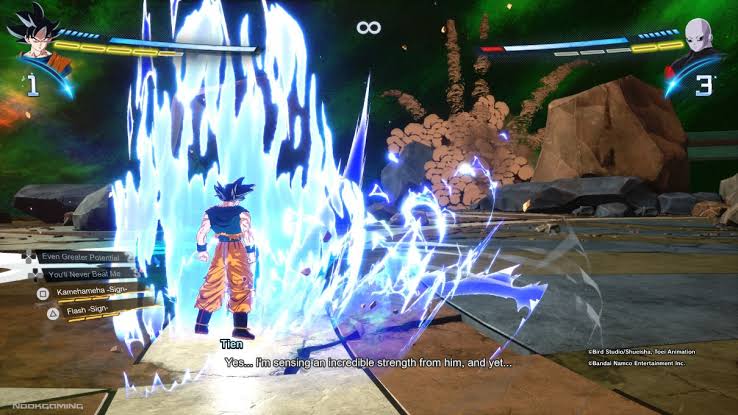
I would never choose between Sparking! Zero and FighterZ by asking which one is simply “better.” FighterZ turns Dragon Ball into a competitive tag game. Sparking! Zero lets me enjoy the series as a power fantasy, complete with wide 3D arenas, flight, transformations, and battles that are not expected to feel perfectly even.
The scale is the reason I recommend it. Charging energy while watching an opponent close the distance creates a familiar Dragon Ball tension. Transforming during the match feels more meaningful than selecting the stronger form from a menu. When two huge attacks meet, I am thinking less about frame advantage and more about how closely the fight resembles the scene I imagined.
Its Episode Battle and Custom Battle systems add value for players who do not plan to spend all their time in ranked matches. Bandai Namco’s official Sparking! Zero page provides the current platform, character, and mode information.
My verdict: Choose Sparking! Zero for the pleasure of creating your own Dragon Ball matchups and letting them become wonderfully excessive. I would not choose it primarily for strict balance; the uneven characters are part of both its charm and its frustration.
5. Naruto x Boruto: Ultimate Ninja Storm Connections - Best for a Large Naruto Roster
Best for: Naruto fans who want accessible arena battles and many familiar characters
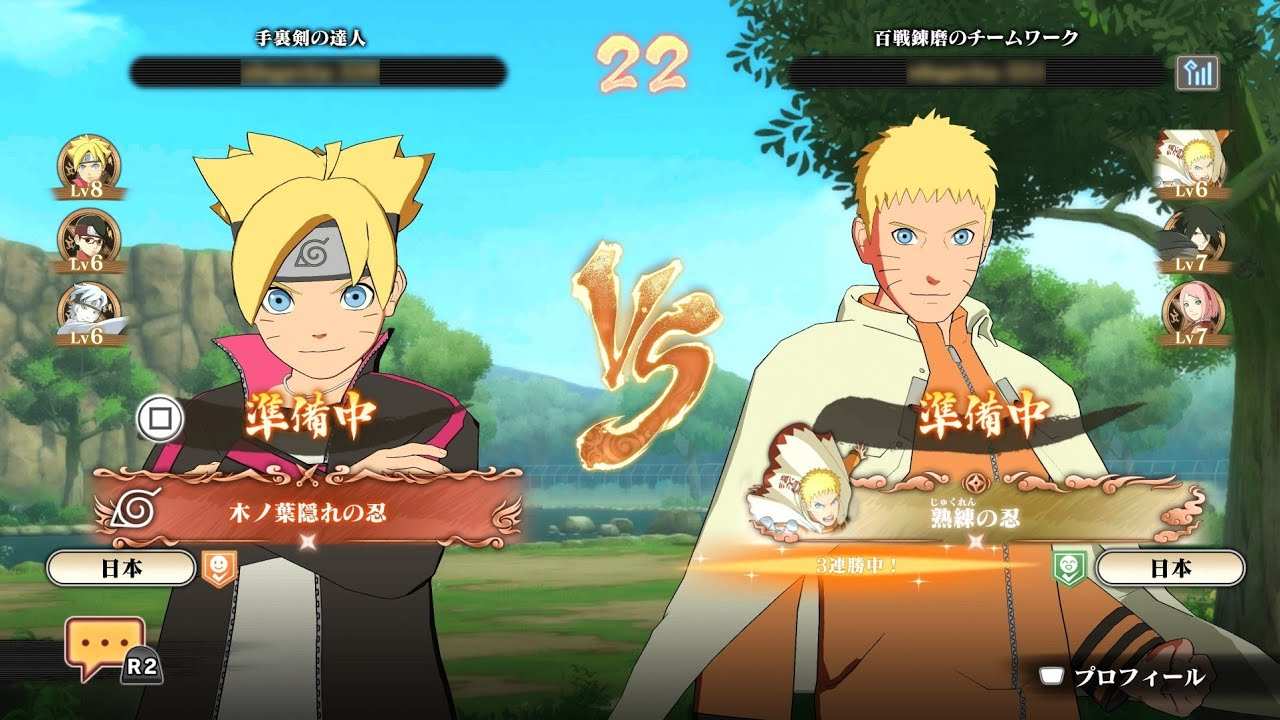
Storm Connections is easy for me to recommend to a Naruto fan and harder to recommend to someone who only wants the deepest fighting system. Its fast movement, support characters, substitutions, chakra management, and cinematic techniques make recognizable battles happen without demanding traditional fighting-game inputs first.
The large character selection creates its best social moments. Picking different versions of Naruto and Sasuke, building an unlikely support team, or replaying a rivalry gives two fans something to argue and laugh about before the match even starts. In that setting, recognition is part of the fun.
My hesitation comes from repetition. Many characters share a similar basic structure, so a large roster does not always produce a completely new way to play. After the excitement of seeing a favorite technique, I do not feel the same urge to study every matchup that I get from Guilty Gear Strive.
My verdict: Choose Storm Connections when sharing the Naruto universe matters more than mastering a tournament-focused fighter. If story content is your main reason for buying, I would also compare it with the older Ultimate Ninja Storm 4.
6. Demon Slayer: The Hinokami Chronicles 2 - Best for Recreating Demon Slayer Duels
Best for: Demon Slayer fans who value presentation and recognizable character techniques
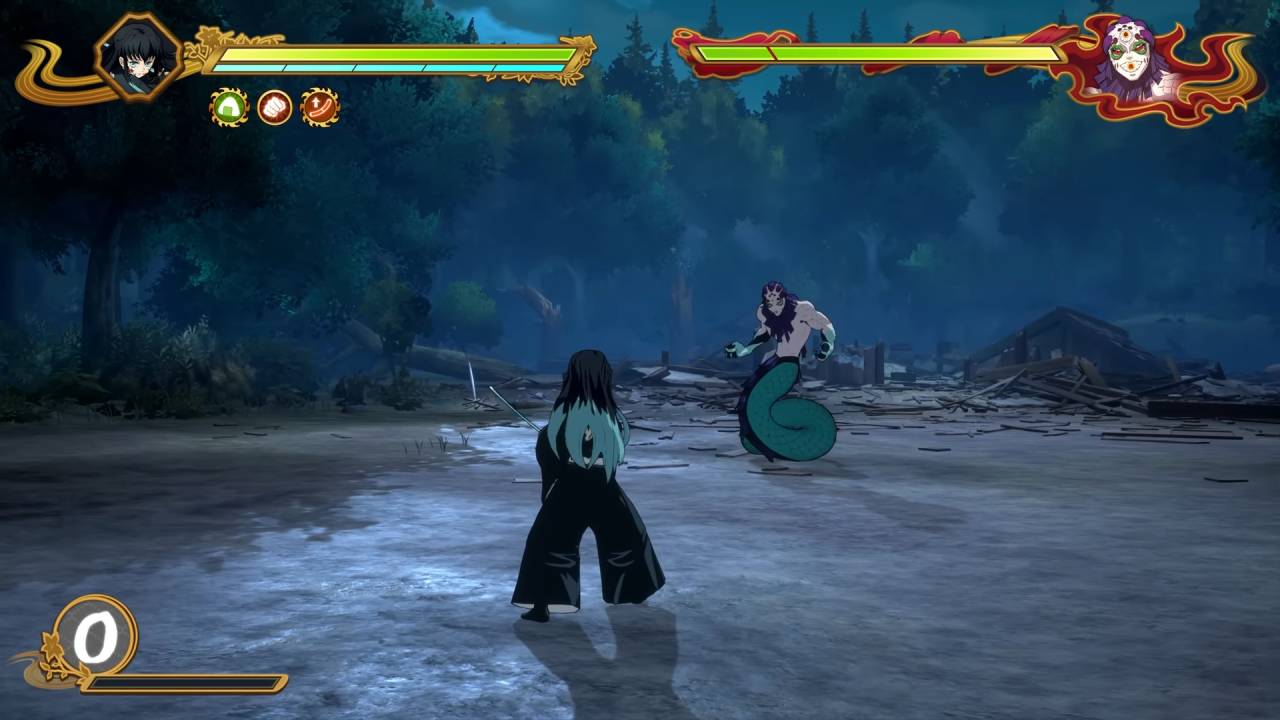
The Hinokami Chronicles 2 appeals to me for a very specific reason: its arena format gives Demon Slayer’s sword styles enough room to move. Fighters close distance quickly, support characters interrupt the flow, and special moves turn a successful opening into a short piece of anime choreography.
What I value most is the connection between a character’s identity and the way an attack feels. Water, flame, mist, sound, and demon abilities are not only different colors around the same strike. They change range, movement, and the rhythm of a team. For a fan, recognizing the technique before it lands adds an excitement that a mechanically stronger but unfamiliar fighter may not create.
That attachment also sets the limit of my recommendation. If the series means little to you, the combat may not offer enough defensive variety or long-term discovery to hold your attention beside Guilty Gear or Granblue.
My verdict: Choose it when you want Demon Slayer’s characters and techniques to be the heart of every match. Choose a traditional 2D fighter if learning the system matters more than recognizing the scene.
7. Melty Blood: Type Lumina - Best for Fast Aerial Movement
Best for: Players who enjoy speed, air dashes, rapid reactions, and flexible combo routes
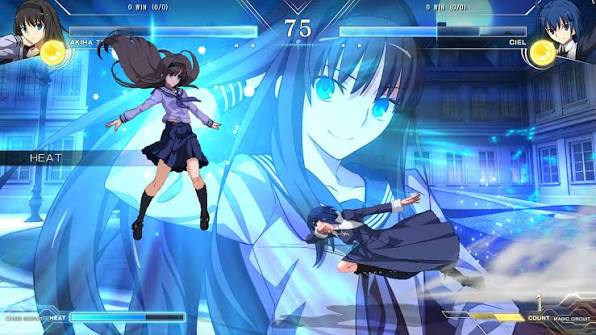
Melty Blood: Type Lumina is the game I would choose when grounded combat starts to feel too restrained. Double jumps, air dashes, broad cancel options, and defensive Shield interactions let both fighters redirect the match almost as quickly as I can form a plan.
That speed creates a particular kind of freedom. A round can move from careful spacing to an aerial scramble and back again in seconds. I like the feeling of improvising through that movement, but it also means mistakes can become difficult to understand until you slow down and study them.
Auto-combo assistance makes early offense less intimidating, yet it does not remove the demanding parts of the game. Movement choices, resource use, defense, and character-specific routes become more important as both players improve.
Type Lumina is technically based on characters connected to Tsukihime rather than a direct adaptation of a current television anime. It still belongs in this discussion because its presentation and combat helped define what many players mean by an “anime fighter.”
My verdict: Choose Type Lumina if quick air movement makes you feel creative rather than lost. Matchmaking can depend on platform, region, and time of day, so I would check the community around your platform before committing to online play.
8. Under Night In-Birth II Sys:Celes - Best for Technical Players
Best for: Players who enjoy training mode, detailed systems, and long-term character mastery
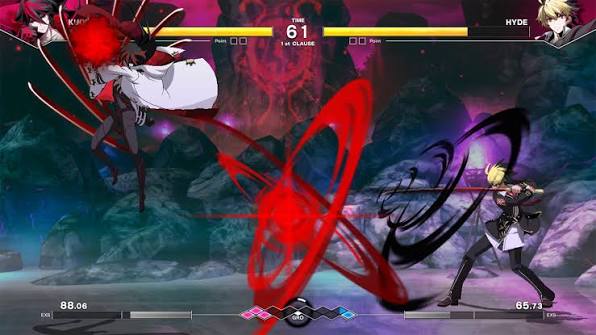
Under Night II is the recommendation I save for players who enjoy pulling a system apart until every decision makes sense. It combines anime mobility with unusually important ground control, while its GRD system creates a second contest beneath the visible fight. Offense, defense, movement, and throws can all influence who gains the next advantage.
I find that kind of design satisfying because a small defensive choice never feels isolated. Blocking patiently, escaping pressure, or taking space can change what becomes possible a few seconds later. Character ranges are distinct, pressure can be complex, and improvement comes from understanding the match rather than simply performing a longer combo.
The game is anime-inspired rather than adapted from a television series. That distinction matters if your priority is playing as a familiar hero. If your priority is a deep combat system with an anime look, it is one of the strongest choices.
My verdict: Choose Under Night II if the idea of studying one character and gradually seeing more meaning in every round excites you. Its vocabulary and layered mechanics create a difficult first impression, so I would send a complete beginner to Granblue first.
What Actually Matters When Choosing an Anime Fighting Game?
1. Choose the Combat Structure Before the Franchise
A familiar character may attract me to a game, but the match structure usually decides whether I keep playing. I choose a traditional 2D fighter when I want careful spacing, blocking, matchup learning, and the satisfaction of gradual improvement. I choose an arena fighter when I want movement, transformations, large attacks, and battles that resemble the scenes that made me care about the series.
2. Check the Online Experience in Your Region
“Online multiplayer” alone tells me very little. I look for rollback netcode, cross-platform play, regional matchmaking, and a realistic chance of meeting players near my skill level. Even a combat system I admire becomes difficult to recommend when every match feels unstable or a beginner has nobody appropriate to learn against.
This is also why browser searches for anime fighting games online can be misleading. Many results lead to simple fan games or unrelated action games. They may be convenient, but they do not necessarily offer ranked matchmaking, balanced characters, reliable support, or safe use of anime properties.
3. Do Not Treat Roster Size as a Quality Score
I understand the appeal of opening a character screen and finding almost everyone I remember from a long-running series. A huge roster makes imagined matchups possible, but it can also hide repeated move structures and difficult balance problems.
A smaller roster may give each character a clearer role. Guilty Gear Strive and Under Night II make character knowledge valuable because different matchups can demand different movement, defense, and attack choices.
4. Look Beyond Competitive Multiplayer
I do not assume that every reader wants to live in ranked mode. Story campaigns, arcade routes, training tools, local versus, custom battles, and computer opponents matter when the game is mainly something you enjoy alone or share with friends.
Before buying, ask yourself where most of your time will go. Sparking! Zero is easier to recommend for solo Dragon Ball scenarios. Granblue is easier to sample. Guilty Gear and Under Night make more sense when learning the combat itself is the main attraction.
5. Choose a Character You Want to Keep Learning
The easiest game is not always the one I would tell you to start with. A clear tutorial helps, but a character you genuinely want to understand gives you a better reason to return after the early losses.
Look at how the character moves, not just how strong they appear in a tier list. A slow grappler, quick rushdown fighter, long-range zoner, and support-focused team character can make the same anime game feel completely different.
Can You Make Your Own Anime-Style Fighting Game?
When I think about creating an anime-style fighter, I would not begin with a huge roster or a complete online system. I would begin with the smallest match that can reveal whether attacking, defending, and moving already feel satisfying.
SoonLab’s AI action game maker can turn a written combat idea into a playable browser game. For a side-view match, the 2D game maker is another useful starting point.
Turn your idea into aanime fighting game
Describe the game you want to make, and SoonLab will help you start building it.
I would begin with two original fighters, one arena, movement, blocking, a quick attack, a heavy attack, health bars, and a clear win condition. The text-to-game AI workflow lets you describe those rules in plain language and improve them after testing.
Keep the characters original. You can request cel-shaded art, dramatic attack effects, expressive poses, or another anime-inspired direction without copying protected characters, names, costumes, or signature attacks.
Once the first match works, adjust attack range, damage, recovery time, movement speed, and hit feedback one element at a time. You can browse playable action games made with SoonLab for mechanic ideas, then open the SoonLab game creation page to build an original concept.
Which Anime Fighting Game Should You Play First?
If I could recommend only one anime fighting game, I would choose Guilty Gear Strive. It gives me the immediate pleasure I want from anime combat, but its characters and systems still make improvement feel personal. Every new piece of understanding changes what I can attempt in the next match.
I would choose Granblue Fantasy Versus: Rising instead for someone who wants encouragement before complexity. For Dragon Ball, I would pick FighterZ when I want to build and master a team, then switch to Sparking! Zero when I care more about transformations, unlikely matchups, and the joyful excess of the anime.
Naruto Storm Connections and The Hinokami Chronicles 2 are more emotional choices. I recommend them when affection for the characters will make every familiar technique mean more. Melty Blood and Under Night II are the opposite: I would choose them when the combat system itself is what I want to fall into.
That is what separates the best anime fighting games from games that only look right in a screenshot. The visual style may bring me in, but I need a reason to care about the next round. Sometimes that reason is improvement. Sometimes it is a favorite character. Sometimes it is the friend beside me insisting that their impossible matchup can still win.
FAQs About Anime Fighting Games
What is the best anime fighting game?
Guilty Gear Strive is the strongest overall choice for competitive anime-style combat. Granblue Fantasy Versus: Rising is better for beginners, while Dragon Ball: Sparking! Zero is better for large cinematic arena battles.
What is the best anime fighting game for beginners?
Granblue Fantasy Versus: Rising is one of the easiest starting points because it offers simple special-move inputs, readable ground combat, useful learning tools, and a limited Free Edition.
Are anime fighting games and anime arena fighters the same?
No. Traditional anime fighters usually keep combat on a two-dimensional plane and focus on spacing, blocking, combos, and competitive matchups. Arena fighters allow wider 3D movement and usually focus more on large rosters and cinematic battles.
Are there free anime fighting games online?
Yes, but the quality and format vary. Granblue Fantasy Versus: Rising has an official Free Edition. Browser sites also host free anime-style combat games, although many are simpler games without the balance, online systems, or support of a commercial fighter.
Is Dragon Ball FighterZ or Sparking! Zero better?
Choose Dragon Ball FighterZ for competitive three-on-three combat, assists, combos, and structured matches. Choose Sparking! Zero for a larger roster, 3D movement, transformations, solo scenarios, and battles that more closely resemble the anime.
What is the difference between an anime game and an anime-inspired game?
An anime game is usually based on an existing series, such as Dragon Ball, Naruto, or Demon Slayer. An anime-inspired game uses similar visual or storytelling influences but has an original world and cast. Guilty Gear and Under Night In-Birth are anime-inspired video games rather than direct adaptations.
Can I create an anime fighting game without coding?
You can create a small anime-style combat prototype with an AI or no-code game maker. Start with original fighters and a limited move set. Advanced online multiplayer, precise frame data, complex computer opponents, and commercial production may still require coding and a full game engine.